
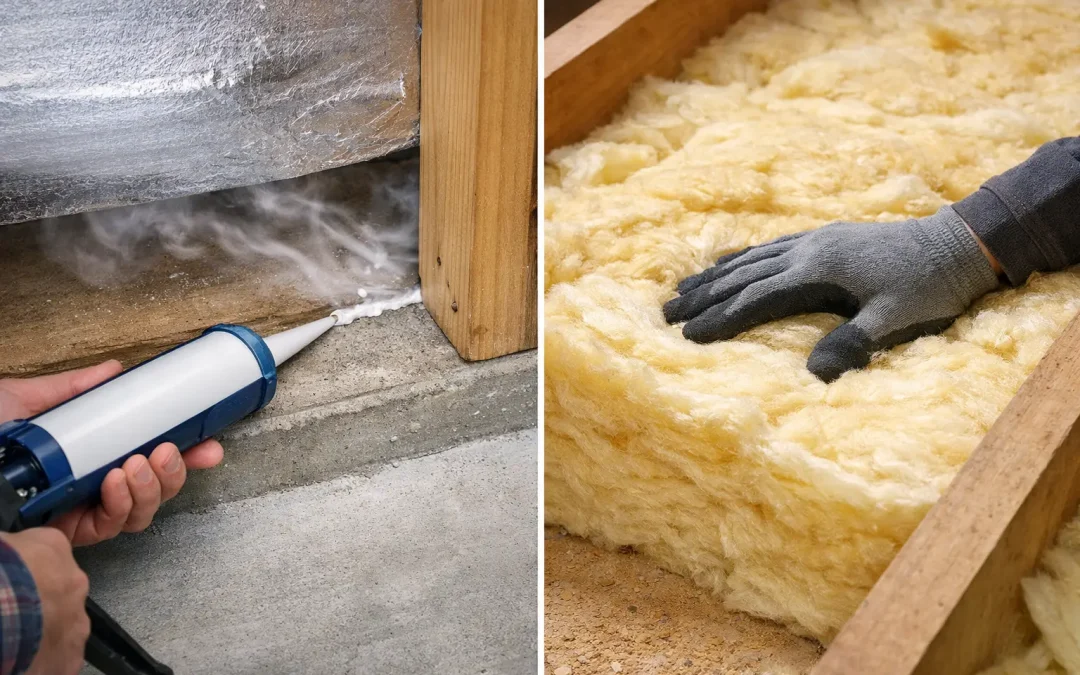
A home can have plenty of insulation and still feel cold near the windows, stuffy upstairs, or expensive to cool. That is the air sealing vs insulation difference in action. Insulation slows heat transfer, while air sealing stops uncontrolled air movement through the building envelope. Both matter, but they solve different problems.
For Arizona homeowners, builders, and commercial property owners, treating them as the same thing can lead to disappointing results. Adding more insulation over major air leaks may improve R-value on paper, yet drafts, dust, moisture, and high HVAC run times can remain. The best approach is to understand what each function does, where each falls short, and how to build a complete thermal and air barrier.
Air Sealing vs Insulation Difference: The Core Function
Insulation resists the movement of heat. In winter, it slows heat from leaving a heated home. In summer, it slows outdoor heat from moving into conditioned space. Its performance is commonly measured by R-value, which indicates resistance to conductive heat flow.
Air sealing addresses moving air. Small gaps around plumbing penetrations, recessed lights, attic hatches, rim joists, duct openings, electrical boxes, and framing connections can let conditioned air escape and outdoor air enter. Air carries heat far more quickly than still air, so leaks can undermine the performance of the insulation around them.
Think of a winter jacket. The insulation is the lofted material that holds warmth near your body. A zipper left open lets cold air rush in, regardless of how thick the jacket is. Air sealing closes the zipper. Insulation provides thermal resistance. A high-performing home needs both.
Why Insulation Alone Does Not Stop Drafts
Fiberglass batts, blown-in fiberglass, and rockwool are effective insulation materials when correctly selected and installed. They can provide reliable thermal resistance, sound control, and value. However, most conventional insulation does not create a continuous air barrier by itself.
Air can pass around batts, through gaps in framing, and through openings that remain hidden once an attic or wall cavity is covered. Fiberglass may filter moving air, but it does not reliably stop that air. If a batt is compressed, poorly fitted, wet, or interrupted by wiring and plumbing, its real-world performance drops further.
That does not make conventional insulation a poor choice in every project. It means the installation must include a separate air-sealing plan. Before adding attic insulation, for example, penetrations at top plates, duct chases, wiring holes, and ceiling fixtures should be sealed. Without that step, new insulation can cover the evidence of leaks without fixing them.
What Air Leakage Costs a Building
Air leakage is not just a comfort issue. It affects energy use, indoor air quality, and the durability of the structure.
When conditioned air escapes through the attic, crawl space, or exterior walls, the HVAC system has to replace it with outside air. During Payson-area winters, that can mean cold air entering through low-level gaps while warm air exits at the top of the home. During hot, dry periods, attic heat can push toward living spaces and force cooling equipment to work harder.
Leaky buildings can also bring in dust, pollen, smoke, and outdoor pollutants. In some cases, air movement carries moisture into wall or roof assemblies where it can condense on cool surfaces. Arizona is known for dry conditions, but moisture management still matters around bathrooms, kitchens, crawl spaces, monsoon-driven rain events, and buildings with poorly controlled indoor humidity.
Air sealing also improves comfort room by room. A thermostat measures one location, not every corner of a house. Stopping air movement helps reduce cold floors, uneven bedroom temperatures, and the persistent draft that makes occupants adjust the thermostat more than necessary.
Where Spray Foam Changes the Equation
Spray foam insulation is different because it can insulate and air seal in one installed system. Applied correctly, it expands to fill irregular cavities, adheres to framing and sheathing, and seals many small gaps that would require separate sealing work with other insulation types.
Open-cell spray foam is a lighter, flexible material often used in interior wall cavities, roof decks, and other areas where air sealing and sound reduction are priorities. It expands significantly, helping it reach around irregular shapes and penetrations. Closed-cell spray foam is denser and delivers a higher R-value per inch. It also offers stronger moisture resistance and can add rigidity to an assembly.
The right choice depends on the building and location. A shallow cavity may call for closed-cell foam because available thickness is limited. An attic roofline, wall system, crawl space, metal building, or moisture-sensitive area may require a different design than a standard vented attic. The goal is not to use one product everywhere. The goal is to create a continuous system that controls heat, air, and moisture where each belongs.
Spray foam has a higher upfront cost than many conventional insulation options. That is a real trade-off. But homeowners and builders often choose it for the performance gain: fewer air leaks, more stable indoor temperatures, reduced HVAC demand, and a more controlled building envelope. Over time, those benefits can support lower operating costs and a more comfortable property.
The Best Strategy Depends on the Area Being Insulated
Different parts of a building need different solutions. An attic floor, for example, may perform well with air sealing at the ceiling plane followed by properly installed blown-in insulation. This can be a practical approach when the attic remains vented and accessible.
A conditioned attic or roof deck requires a different approach. Insulating along the roofline can bring ducts and mechanical equipment inside the conditioned envelope, reducing their exposure to extreme attic temperatures. Spray foam is often selected here because it forms both insulation and an air barrier at the roof deck when installed to the appropriate thickness and design.
Crawl spaces deserve equal attention. A crawl space can introduce cold air, dampness, and musty odors into the home above. Depending on whether the crawl space is vented or encapsulated, insulation may be installed at the floor system or along foundation walls. Air sealing and moisture control should be evaluated together rather than as separate repairs.
Metal buildings have their own challenges. Steel transfers heat readily, and condensation can become a concern when warm, moist air reaches cold metal surfaces. Closed-cell spray foam is frequently a strong option for metal buildings because it adheres to the structure, provides thermal resistance in limited space, and helps control air movement and moisture exposure.
How to Spot an Air-Sealing Problem
You do not need specialized equipment to recognize every issue, although professional diagnostics can reveal hidden leaks. Common signs include rooms that are difficult to heat or cool, dust collecting around supply vents, insulation that looks disturbed by air movement, cold or hot floors, and a noticeable draft near outlets or baseboards.
High utility bills without a clear explanation are another signal. So is a home that feels comfortable only when the HVAC system runs constantly. In older homes, renovations can create new openings or expose gaps that were never sealed properly. Newer construction can have the same problems when trades create penetrations that are not sealed before drywall or insulation is installed.
A qualified insulation contractor should inspect the whole assembly, not simply recommend the highest R-value available. The useful questions are: Where is air moving? Where is heat moving? Is moisture at risk? What condition is the existing insulation in? And can the proposed solution be installed continuously without leaving weak points?
Better Performance Starts With the Building Envelope
The air sealing vs insulation difference matters because comfort does not come from one number on an insulation label. It comes from controlling the entire boundary between conditioned indoor space and the outdoors. That boundary includes attics, walls, crawl spaces, rooflines, rim joists, ducts, and dozens of small transitions where materials meet.
For some homes, targeted air sealing plus new blown-in insulation is the right investment. For others, especially projects seeking maximum envelope performance or better moisture control, spray foam can provide a more complete solution. Ridgetopp Insulation helps property owners evaluate those choices based on the building itself, not a one-size-fits-all recommendation.
If your home has drafts, uneven temperatures, or energy costs that keep climbing, start by looking beyond insulation depth alone. A careful assessment of air leakage and insulation performance can point to the improvement that will make your space feel better every day.