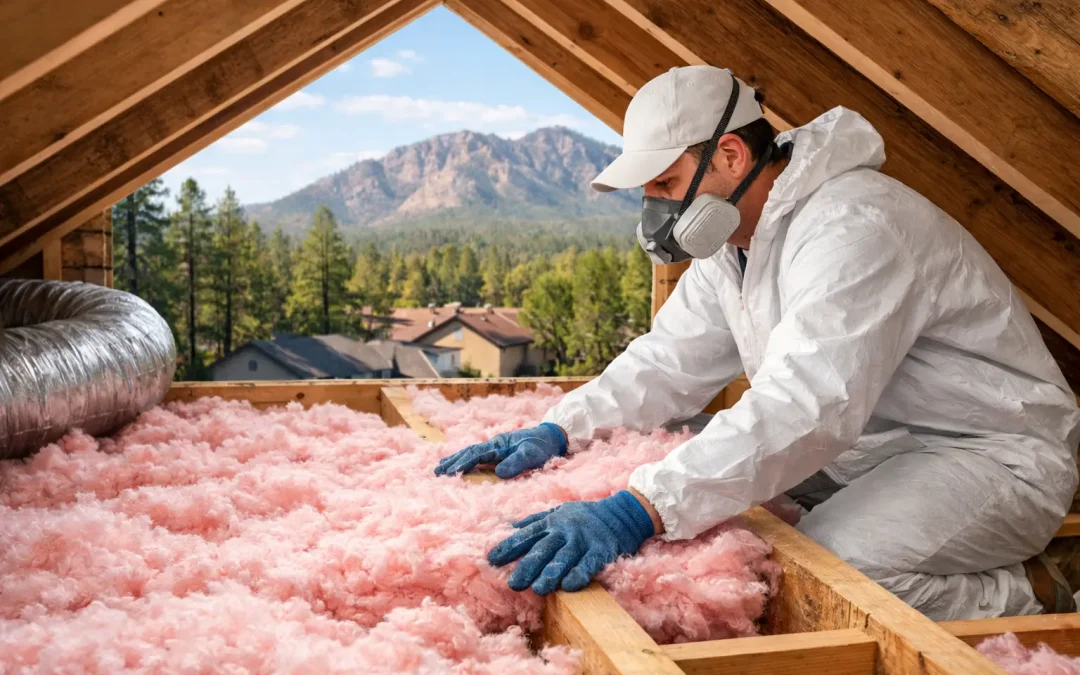
A cold bedroom at the end of the hall, a living room that overheats every afternoon, and an HVAC system that seems to run without a break often point to the same place: the attic. In Rim Country, attic insulation Payson AZ homeowners install is not a minor upgrade. It is a major part of controlling how a home handles winter cold, summer heat, wind-driven drafts, and indoor moisture.
The problem is not always that an attic has no insulation. Many homes have plenty of material on the attic floor but still lose conditioned air through gaps around ceiling penetrations, ductwork, recessed lights, framing connections, and access hatches. Insulation slows heat transfer. Air sealing stops unwanted air movement. A high-performing attic needs both.
Why Payson Attics Demand Better Performance
Payson’s elevation creates real temperature swings. Winter nights can be cold enough to expose weak spots in a home’s thermal envelope, while sunny days and summer heat can load an attic with intense radiant heat. When outside air and attic temperatures change rapidly, every unsealed opening becomes more noticeable.
Warm indoor air naturally rises during heating season. If it leaks into the attic through holes in the ceiling plane, the home pulls replacement air in through lower-level gaps. That is why a house can feel drafty even when windows are closed. During cooling season, attic heat presses down on the ceiling, and leaky ducts can waste cooled air before it reaches the rooms meant to receive it.
The result is not limited to higher utility bills. Uneven temperatures, dusty rooms, uncomfortable floors, excessive HVAC cycling, and persistent hot or cold zones all affect how a building feels every day. For a vacation property, a primary residence, or a commercial building, those comfort problems can become expensive over time.
Insulation Alone Does Not Solve Air Leaks
Conventional fiberglass and blown-in fiberglass can provide useful thermal resistance when installed correctly and to the proper depth. They are commonly used for attic floors and can be a cost-effective option in the right application. But these materials do not create an air barrier on their own.
That distinction matters. Air can move through or around loose-fill and batt insulation if gaps in the ceiling plane remain open. A home may have a deep layer of insulation and still leak heated or cooled air through unsealed wiring holes, plumbing openings, top plates, soffits, and attic hatches.
Spray foam addresses this issue differently. It insulates and air seals in one application, expanding into irregular gaps and connections that are difficult to cover with conventional materials. In the right attic assembly, that can substantially reduce uncontrolled airflow and help the HVAC system maintain a more stable indoor temperature.
This does not mean spray foam is automatically the answer for every attic. Existing roof conditions, ventilation design, roofline access, duct location, budget, and long-term plans for the building all matter. The best recommendation begins with an inspection of the actual attic, not a one-size-fits-all material choice.
Choosing the Right Attic Insulation in Payson AZ
There are two primary strategies for insulating an attic: insulating the attic floor or insulating the roofline. Each changes the location of the home’s thermal boundary, and each has trade-offs.
Attic-floor insulation
In a traditionally vented attic, insulation is installed across the attic floor, above the living space. Fiberglass blow-in is a common choice because it can cover large areas efficiently and fill between ceiling joists. Fiberglass or rockwool batts may also be appropriate in specific areas when installed without compression or gaps.
This approach can perform well when the ceiling plane is thoroughly air sealed first. The attic remains outside the conditioned space, so ducts and air handlers located there still face summer heat and winter cold. If the duct system is leaky or poorly insulated, the energy penalty can remain significant.
Roofline insulation with spray foam
Applying spray foam to the underside of the roof deck brings the attic into the conditioned building envelope. This can be especially valuable when HVAC equipment, ductwork, or complex framing is located in the attic. Instead of forcing equipment to operate in an extreme attic environment, the space becomes more temperature stable.
Open-cell spray foam is often selected where air sealing, sound reduction, and expansion into difficult cavities are priorities. Closed-cell spray foam offers a higher R-value per inch and adds stronger moisture resistance, making it a practical solution where space is limited or moisture control is a higher concern.
The trade-off is upfront investment. Spray foam typically costs more than conventional insulation, but the value is not limited to R-value. Reduced air leakage, better duct performance, moisture control, and improved comfort can make it the stronger long-term building-envelope solution. The right choice depends on what the home needs to correct.
Details That Can Make or Break Attic Performance
Material selection matters, but installation details determine whether an attic delivers the results you expect. Before adding insulation, a qualified contractor should identify air leakage paths and confirm that bathroom fans, kitchen exhausts, and dryer vents terminate outdoors rather than into the attic.
Attic access doors deserve attention as well. An uninsulated, unsealed hatch can act like an open window in the ceiling. Recessed light fixtures, plumbing stacks, electrical penetrations, and open framing chases can create similar weak points. These areas should be addressed with materials and methods appropriate for heat, clearance, and code requirements.
Ductwork is another frequent source of waste. A duct with damaged insulation, loose connections, or leaks can dump conditioned air into the attic while pulling dusty attic air toward the system. Air sealing and properly insulating ducts can be as meaningful to comfort as adding insulation depth.
Moisture should never be ignored. Roof leaks, disconnected vents, and condensation problems need correction before insulation is installed. Covering a moisture source does not solve it. It can make future damage harder to identify and can compromise the performance of the insulation system.
Signs Your Attic May Need Attention
A home does not need to be old to have an underperforming attic. Construction gaps, remodeling work, settling, pest activity, damaged insulation, and changing HVAC systems can all affect performance. Consider an attic evaluation if you notice several of these conditions:
- Rooms that remain much hotter or colder than the thermostat setting
- High heating or cooling costs without a clear change in energy use
- Drafts around ceilings, light fixtures, or attic access points
- Uneven temperatures between floors or at opposite ends of the home
- Visible compressed, displaced, wet, or contaminated insulation
- HVAC equipment or ducts operating in an extremely hot or cold attic
These symptoms do not always mean insulation is the sole cause. Window performance, equipment sizing, duct leakage, and roof issues can also contribute. A whole-home perspective prevents spending money on the wrong fix.
What a Professional Attic Evaluation Should Include
A useful insulation quote should be based on more than square footage. The contractor should look at existing insulation type and depth, attic accessibility, ventilation or roofline configuration, air leakage opportunities, duct placement, signs of moisture, and the customer’s comfort concerns.
For builders and remodelers, the discussion should also include the intended thermal boundary and how insulation will integrate with framing, mechanical systems, and code requirements. Spray foam is most effective when it is planned as part of the building envelope, not treated as an afterthought after other trades have created unsealed openings.
A professional should be clear about what will be removed, sealed, installed, and protected. They should also explain why a recommended material fits the application. The goal is not to add the most insulation possible. It is to create an attic system that manages heat flow, air movement, and moisture in a way that supports the entire building.
A Better Attic Starts With the Right Diagnosis
The lowest-priced insulation option can be expensive if it leaves the original comfort problem untouched. A properly designed attic upgrade can help a home feel quieter, cleaner, more consistent, and easier to heat and cool. It can also reduce strain on HVAC equipment that has been working overtime to compensate for a weak building envelope.
If your attic is contributing to drafts, uneven temperatures, or rising energy costs, start with a straightforward assessment of the space and the problems you are experiencing. Ridgetopp Insulation can help Payson-area property owners identify the insulation and air-sealing approach that delivers real, lasting performance.