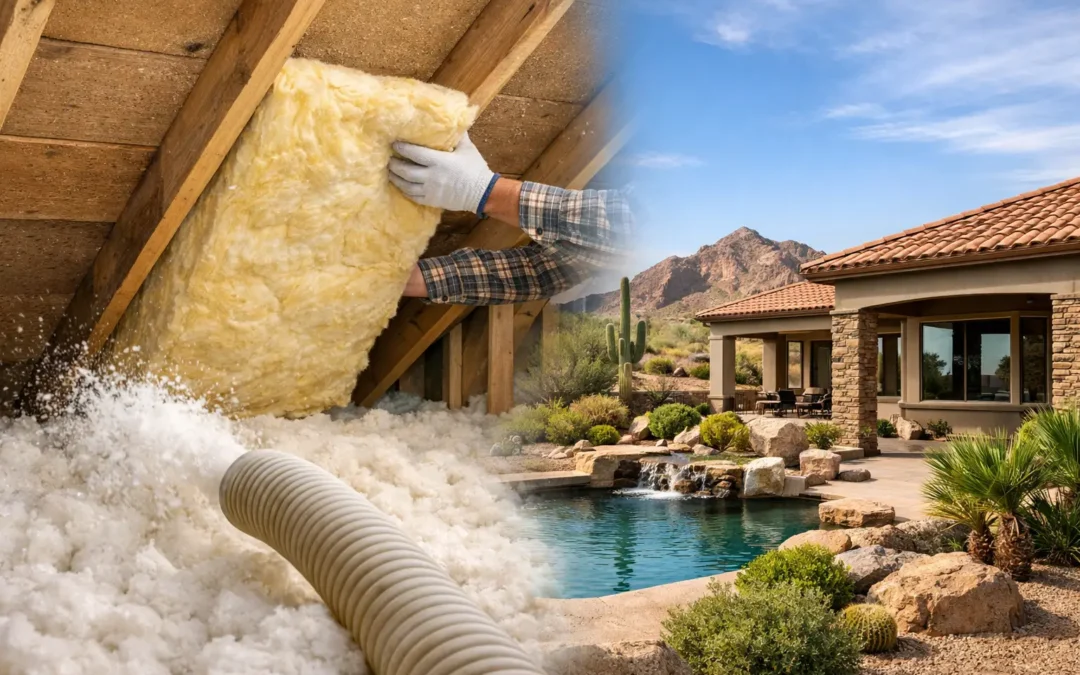
Step into an Arizona attic in July and the question gets very real, very fast. The best insulation for Arizona homes is not just about R-value on paper. It is about stopping brutal heat gain, reducing air leakage, controlling moisture in the right places, and keeping your HVAC system from fighting a losing battle all summer.
Arizona homes deal with more than one climate challenge. Desert areas face extreme heat, intense sun, and major day-to-night temperature swings. Higher elevations around places like Payson and the Rim Country can also see cold winters, snow, and shoulder-season moisture. That means the right insulation depends on where the home is located, how it is built, and what problem you are trying to solve. If your goal is the best overall performance, spray foam usually rises to the top. If your goal is the lowest upfront cost, fiberglass may still have a place. The key is knowing what each material actually does in a real Arizona house.
What makes insulation work in Arizona
A lot of homeowners assume insulation only slows heat transfer. That is true, but it is only part of the story. In Arizona, air leakage is often just as important as R-value. If hot outside air is slipping through gaps in the attic, walls, rim joists, or crawl space, your home can feel uncomfortable even if the insulation level looks decent.
That is why the best-performing insulation systems do two jobs at once. They insulate and air seal. When those two functions work together, you get steadier indoor temperatures, fewer drafts, lower energy bills, and less strain on your heating and cooling equipment.
Moisture also matters more than many people expect. Even in dry climates, condensation can show up when hot air meets cooler surfaces, especially around ductwork, roof decks, and poorly sealed building cavities. In mountain communities and mixed climates, moisture control becomes even more important.
Best insulation for Arizona homes by material
Spray foam insulation
If you want top-tier performance, spray foam is usually the best insulation for Arizona homes. It delivers high thermal performance, but the bigger advantage is air sealing. Unlike conventional insulation that can leave gaps around penetrations and framing irregularities, spray foam expands to fill cracks and voids. That dramatically reduces uncontrolled air movement.
Open-cell spray foam is a strong option for many interior applications. It provides effective air sealing, helps with sound control, and works well where you want insulation that conforms tightly to the cavity. Closed-cell spray foam offers a higher R-value per inch and adds greater moisture resistance and rigidity. It is especially useful where space is limited or where a stronger vapor and moisture barrier is needed.
For Arizona homes, spray foam can be a game changer in attics, walls, crawl spaces, and metal buildings. In vented attics with traditional insulation on the attic floor, ductwork often sits in extreme heat. By insulating the roof deck with spray foam and bringing the attic into the conditioned envelope, many homes see better HVAC efficiency and more consistent comfort.
The trade-off is cost. Spray foam costs more upfront than fiberglass or blown-in products. But for homeowners and builders focused on long-term performance, lower utility bills, better comfort, and fewer air leakage problems, it often delivers the strongest value over time.
Fiberglass batts
Fiberglass batts remain common because they are affordable and widely available. In the right installation, they can provide decent thermal resistance in walls, floors, and some attic applications. For budget-driven projects, they are often the first material considered.
The catch is performance depends heavily on installation quality. Fiberglass does not air seal. If there are gaps, compression, voids, or poor fit around wiring and plumbing, actual performance can fall short of the rated value. In Arizona, where heat intrusion through small leaks adds up fast, that matters.
Fiberglass batts can still make sense in certain assemblies, especially when paired with strong air sealing measures. But by themselves, they usually do not solve the comfort and efficiency issues homeowners complain about most.
Blown-in fiberglass
Blown-in fiberglass is often used in attics and can be a practical upgrade when an existing home needs more insulation on the attic floor. It covers broad areas more evenly than batts and can help improve thermal performance without major demolition.
Still, blown-in fiberglass shares the same limitation as batt insulation. It is not an air barrier. If attic penetrations, top plates, recessed lighting, and duct chases are not sealed first, hot air will still find its way in. That means the material can help, but it works best as part of a system, not as a standalone fix.
Rockwool
Rockwool batts are denser than fiberglass and offer solid thermal performance, sound control, and fire resistance. They are more resistant to settling and can perform well in wall and floor assemblies.
For homeowners or builders who want a premium batt product, rockwool is a better performer than standard fiberglass in many cases. But like fiberglass, it does not create a true air seal. That keeps it from matching spray foam in overall building-envelope performance.
The best insulation for Arizona homes often depends on where it goes
Attics
In many Arizona houses, the attic is the biggest source of heat gain. If the attic floor has old or inadequate insulation, adding blown-in fiberglass or batt insulation may improve performance. But if the home suffers from major duct losses, uneven room temperatures, or high summer cooling bills, attic spray foam may be the better solution.
This is one of the biggest decision points. Adding more traditional attic insulation can cost less upfront. Creating an unvented, conditioned attic with spray foam can deliver much stronger overall performance. The right answer depends on your budget, roof design, duct location, and energy goals.
Walls
In exterior walls, insulation needs to do more than fill space. It should limit heat transfer and reduce outside air infiltration. Spray foam is especially effective here because wall cavities often have irregular gaps that batt products do not fully address.
For new construction, wall insulation choices have a long-term impact on comfort and operating cost. For retrofit projects, access and budget often shape the decision.
Crawl spaces and rim joists
These areas are easy to overlook, but they can be major sources of drafts and moisture problems. Closed-cell spray foam is often a strong choice because it seals hard-to-reach areas while adding moisture resistance.
Metal buildings
Arizona metal buildings can become ovens in summer and lose heat quickly in winter. Spray foam performs especially well here because it adheres directly to the metal surface, reduces condensation risk, and creates a more complete thermal envelope.
How to choose the right insulation for your home
Start with the problem, not the product. If your home is simply under-insulated, adding attic insulation may help. If you have hot rooms, drafts, uneven temperatures, dust intrusion, or high energy bills, the bigger issue may be air leakage. In that case, insulation that also air seals will usually outperform cheaper materials.
Home age matters too. Older Arizona homes often have more leakage points and inconsistent insulation. New construction offers more control, which makes it easier to design the right system from the beginning.
Climate zone matters as well. A home in low-desert heat has different demands than a home in higher elevations with freezing temperatures. That is one reason local expertise matters. A contractor who understands Arizona building conditions can recommend the right assembly instead of pushing a one-size-fits-all answer.
Where spray foam stands out most
Spray foam is not the cheapest option, and it is not necessary in every single application. But it stands out anywhere air leakage, HVAC efficiency, moisture management, and long-term comfort are priorities. That is why many homeowners, builders, and property owners see it as the premium solution.
At Ridgetopp Insulation, that is the core value of spray foam systems. They do more than slow heat transfer. They help tighten the building envelope, protect against unwanted moisture, reduce drafts, and support a healthier, more comfortable indoor environment.
If you are comparing insulation options, focus on total performance rather than just material cost or labeled R-value. The cheapest product can become the expensive choice if it leaves your home hot, drafty, and costly to cool. The best insulation choice is the one that fits your home, your climate, and the results you actually want.
A cooler home in summer, a warmer home in winter, and lower utility bills year after year usually start with one decision: choosing insulation that works as a system, not just a product.