A crawl space can quietly affect nearly every room above it. If outside air, ground moisture, pests, and dust can move freely beneath your floors, your home has to work harder to stay comfortable. The most meaningful crawl space encapsulation benefits come from turning that neglected area into a controlled part of your home’s building envelope.
For Arizona homeowners, this matters even in dry climates. Seasonal monsoons, plumbing leaks, damp soil conditions, and large temperature swings can introduce moisture and humid air where you do not want it. Meanwhile, unsealed crawl spaces allow hot or cold outdoor air to influence floor temperatures and force heating and cooling equipment to run longer.
What Crawl Space Encapsulation Actually Does
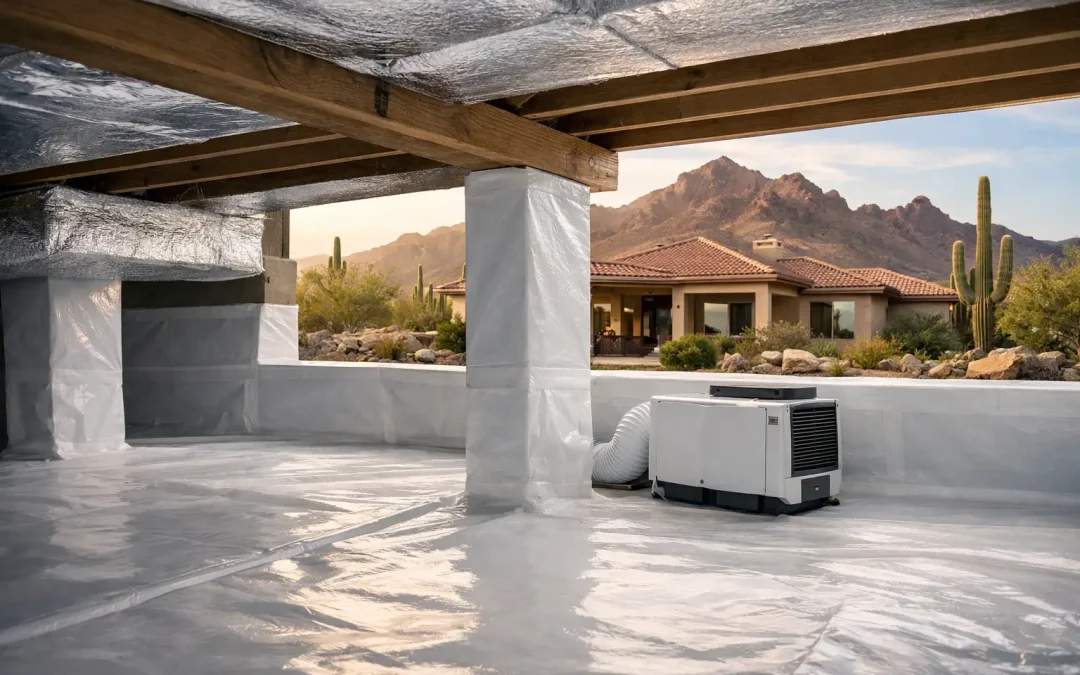
Encapsulation is more than adding insulation between floor joists. A properly designed system covers exposed soil with a durable vapor barrier, seals seams and foundation-wall transitions, closes unwanted air pathways, and addresses vents, penetrations, and moisture sources. Depending on the home, insulation may be installed along crawl space walls and rim joists to bring the area inside the conditioned envelope.
Closed-cell spray foam is often a strong choice for crawl space walls and rim joists because it insulates and air seals in a single application. It also resists moisture better than many conventional insulation materials. The right assembly depends on the foundation, existing moisture conditions, local code requirements, and whether mechanical equipment or ductwork is located below the floor.
The goal is not to make a crawl space airtight without a plan. The goal is to control how moisture and air move through the home. A qualified insulation contractor should identify water entry, drainage issues, duct leakage, and combustion or ventilation requirements before recommending the final approach.
Lower Energy Use Starts at the Floor
Many homeowners notice cold floors in winter, rooms that never feel quite right, or an air conditioner that seems to run without delivering consistent comfort. These problems can begin in the crawl space. When outside air enters through foundation vents, gaps around plumbing, uninsulated rim joists, or loose floor insulation, it reaches the living space above.
Encapsulation reduces that unwanted air movement. Instead of allowing outdoor conditions to press directly against the underside of your floors, the crawl space becomes a more stable environment. That can reduce heat loss during cool Rim Country winters and help limit heat gain during warmer periods.
Energy savings vary by home. A newer home with well-sealed ducts and an already insulated crawl space may see a smaller change than an older home with open vents, sagging fiberglass, and exposed ductwork. Still, improving the crawl space is often one of the most effective ways to support the performance of your entire insulation system.
Better Duct Performance Below the House
Ductwork in an unconditioned crawl space loses valuable heated or cooled air before it reaches the rooms where you need it. Even properly insulated ducts perform less effectively when they sit in extreme temperatures or leak at connections.
Encapsulation creates a less hostile environment around ducts and air handlers. It does not replace duct sealing or repair, but it helps protect the conditioned air moving through the system. The result can be more even room temperatures, less equipment run time, and better value from every dollar spent on heating and cooling.
Crawl Space Encapsulation Benefits for Moisture Control
Moisture is a building durability issue, not just a comfort issue. Ground moisture can evaporate upward through bare soil. Humid outdoor air can enter through vents. Small plumbing leaks can remain hidden for months. Once moisture settles into wood framing, insulation, and subflooring, it can contribute to musty odors, mold growth, wood damage, and insect activity.
A sealed vapor barrier blocks moisture vapor rising from the ground, while air sealing limits humid air infiltration. Together, these measures make it easier to keep crawl space humidity under control. In homes with ongoing moisture concerns, a dehumidifier, drainage improvement, sump system, or plumbing repair may also be necessary. Encapsulation works best when the source of bulk water is corrected first.
This is an area where shortcuts create expensive problems. Laying a thin sheet of plastic over damp soil without sealing seams, extending material up foundation walls, or fixing drainage may provide limited benefit. A professional system is designed to stay in place, resist tears, and manage the conditions that caused the problem.
Cleaner Indoor Air and Fewer Musty Odors
A large share of the air inside a home can come from below it. Air naturally moves from lower areas toward upper levels as warm air rises and exits through small openings in the attic and upper walls. This stack effect can draw crawl space air, along with dust, odors, moisture, and other contaminants, into living areas.
Encapsulation helps interrupt that pathway. By sealing gaps and separating the home from exposed soil and outside air, it can improve indoor air quality and reduce the musty smell that often appears after wet weather. Families with allergies or respiratory sensitivities may appreciate the difference, especially when the crawl space previously held damp insulation, rodent debris, or visible mold.
No insulation project can guarantee allergen-free air. Filtration, ventilation, housekeeping, and HVAC maintenance still matter. But a cleaner, drier crawl space removes a common source of pollutants before they have a chance to move upstairs.
Protecting Insulation, Framing, and Flooring
Traditional fiberglass insulation under floors can sag, absorb moisture, or become a nesting area for pests when a crawl space is open and damp. Once it falls away from the subfloor, it no longer delivers the insulation value the home needs. Homeowners may keep paying for heating and cooling while getting little performance from the material beneath their feet.
Encapsulation protects the environment around the insulation and structural framing. When paired with the appropriate wall or rim-joist insulation, it can reduce the risk of moisture-related deterioration and help preserve the home’s thermal boundary over time.
It can also support better floor performance. Wood flooring, engineered products, and subfloor materials are all affected by swings in moisture and temperature. Keeping conditions below the home more stable can reduce the stress those materials experience. It will not correct every flooring issue, but it removes one major source of instability.
Is Encapsulation Worth It for Every Crawl Space?
Encapsulation is a premium upgrade, and it is not the right first step in every situation. If a crawl space has standing water, poor grading, failed gutters, foundation drainage problems, or an active plumbing leak, those issues must be addressed before the area is sealed. Trapping bulk water inside a crawl space is never the answer.
The best candidates usually have one or more persistent symptoms: cold floors, high utility bills, musty odors, damp or falling insulation, ductwork below the home, pest activity, or visible signs of moisture. Homes with vented crawl spaces in areas that experience cold nights, monsoon moisture, or major seasonal shifts can also benefit from a more controlled foundation environment.
Cost depends on crawl space size, access, cleanup needs, moisture repairs, vapor barrier thickness, insulation choice, and whether a dehumidification system is needed. The upfront investment is higher than a simple insulation replacement, but the value comes from addressing air leakage, insulation performance, moisture control, and durability together rather than treating each symptom separately.
What a Professional Assessment Should Cover
Before work begins, the crawl space should be inspected as part of the whole home. That means looking beyond the visible insulation. A complete assessment should consider ground moisture, foundation vents, drainage, plumbing penetrations, duct condition, existing insulation, rim joists, pest evidence, and the home’s current ventilation strategy.
For homes in Payson and throughout the surrounding Arizona mountain communities, the contractor should also account for elevation, seasonal temperature changes, and the way the home is used. A full-time residence, a vacation property left closed for long periods, and a home with HVAC equipment in the crawl space can require different solutions.
Ridgetopp Insulation approaches crawl space work with the same principle used for high-performance attic and wall insulation: control air movement, manage moisture, and install insulation where it delivers measurable results. The right design protects the home from below while helping the entire building perform better.
If your floors feel uncomfortable, your crawl space smells damp, or your utility bills do not match the comfort you are getting, the area beneath your home deserves a closer look. A well-planned encapsulation system can turn an overlooked crawl space into a cleaner, drier foundation for a more comfortable home.