
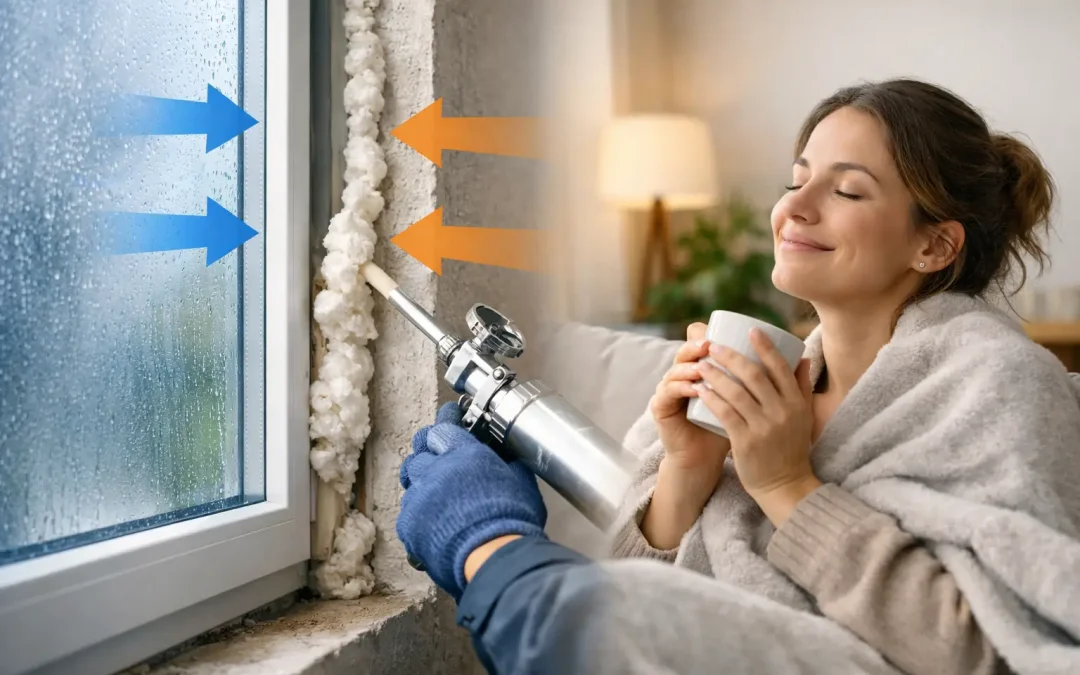
You feel it most in the rooms that never seem to settle down – the bedroom over the garage that stays cold in winter, the living room that heats up by midafternoon, the draft near the baseboards, the dust that keeps showing up no matter how often you clean. That is where how air sealing improves comfort becomes real. Comfort is not just about setting the thermostat. It is about controlling the air you paid to heat or cool so it stays where it belongs.
Many homeowners assume insulation alone fixes these problems. Insulation matters, but air movement is often the bigger issue. If outside air is leaking in and conditioned air is leaking out, your home can still feel uneven and uncomfortable even with insulation in place. Air sealing addresses the gaps, cracks, and penetrations that let your indoor environment drift out of your control.
How air sealing improves comfort in everyday life
The biggest comfort gain from air sealing is consistency. Instead of having one room that feels perfect and another that feels like a different season, a sealed home holds temperatures more evenly. That means fewer hot spots, fewer cold floors, and less of that constant thermostat adjustment that never quite solves the problem.
Air leakage creates drafts that your body notices right away. Even when the thermostat says the house is at the right temperature, moving air can make a room feel colder in winter and less comfortable in summer. Stop the uncontrolled airflow, and the same indoor temperature feels better. That is one reason homeowners often say the house feels calmer after air sealing, even before they talk about lower energy bills.
Humidity control also plays a major role. In Arizona, many people think moisture is not a major concern because the climate is dry. But unwanted air leakage still affects indoor humidity, especially in crawl spaces, attics, and transition areas between conditioned and unconditioned spaces. Air sealing helps reduce the constant exchange between indoor air and outside conditions, which makes the whole home feel more stable.
Drafts are only part of the problem
When people think about air leaks, they usually picture a window or door with a noticeable draft. Those leaks matter, but many of the most important gaps are hidden. Recessed lights, attic hatches, plumbing penetrations, duct chases, rim joists, wall top plates, and wiring openings can all allow air to move through the building envelope.
That hidden air movement is why some homes are uncomfortable even when the windows are decent and the HVAC equipment is working. The building shell is full of small bypasses that add up. Warm air rises and escapes through upper levels in winter, while outside air gets pulled in through lower leaks. In summer, hot outdoor air pushes into the home through every weak point it can find. The result is a house that never quite settles.
Air sealing changes that dynamic. It reduces uncontrolled exchange so your heating and cooling system is not constantly chasing conditions created by leaks.
Why some rooms are harder to keep comfortable
If certain rooms are always too hot or too cold, air leakage is often part of the reason. Bonus rooms, vaulted ceilings, garages converted to living space, and rooms at the ends of duct runs are common trouble spots. Attics are especially important because they can reach extreme temperatures, and any gaps between the attic and living space allow that heat to affect the rooms below.
This is where insulation choice matters. Traditional insulation can slow heat transfer, but it does not always stop air movement. Spray foam stands out because it insulates and air seals in one step. That combination is a major reason it delivers better comfort performance than materials that leave gaps or allow airflow through and around them.
For homeowners who want a premium solution, spray foam often makes the biggest difference in areas where standard insulation falls short. Open-cell and closed-cell foam do different jobs, so the right choice depends on the assembly, budget, and performance goal. But in both cases, controlling air leakage is central to the comfort benefit.
Air sealing helps your HVAC system work the way it should
A home with too much air leakage puts extra strain on the HVAC system. Conditioned air escapes, outdoor air comes in, and the system runs longer trying to make up the difference. That does not just affect efficiency. It affects comfort because equipment that runs longer under poor envelope conditions often still leaves rooms uneven.
Once leakage is reduced, the system has a more stable environment to condition. Air temperatures stay more consistent, and the home can hold those conditions longer. In some cases, better air sealing can also expose that an oversized or undersized system has been masking building envelope issues. That is why the best results come from looking at the whole house, not just one product in isolation.
There is a trade-off here worth mentioning. A tighter home performs better, but it also needs the right ventilation strategy. Good air sealing is not about trapping stale air inside. It is about stopping uncontrolled leakage so fresh air can be introduced intentionally and managed correctly.
Better comfort also means cleaner, healthier indoor air
Air leaks do not just move temperature. They move dust, insulation fibers, outdoor pollutants, and in some cases moisture that can create bigger problems over time. If your attic, crawl space, garage, or wall cavities are connected to the living space through gaps, those areas can influence the air you breathe indoors.
Air sealing helps separate those zones. That can reduce dust infiltration and make indoor air feel cleaner. Homeowners often notice this in practical ways: less dirt buildup near vents and baseboards, fewer odors drifting in from garages or crawl spaces, and less of that dry, drafty feeling that makes a house feel harder to live in.
For people with allergies or respiratory sensitivities, this matters. Air sealing is not a medical treatment, but reducing uncontrolled air movement can be an important part of creating a healthier indoor environment.
Where air sealing delivers the biggest payoff
Not every part of the home has the same impact. The attic is usually high on the list because it is one of the biggest sources of energy loss and comfort problems. Sealing penetrations at the ceiling plane can make a noticeable difference in how the whole house feels.
Crawl spaces and rim joists are also common problem areas. So are attached garages, cantilevered floors, metal buildings, and older homes with multiple additions or renovations. In many Arizona homes, solar heat and large daily temperature swings make these weak points even more noticeable.
New construction can benefit too. Builders who focus on envelope performance know that comfort complaints often trace back to air leakage details that were missed during the build. Getting the shell right early is usually more effective and less disruptive than trying to patch comfort issues later.
Why premium air sealing usually pays off
Cheaper insulation options can help, but if they do not control air leakage well, comfort gains may be limited. That is the case for many batt-only applications where installation quality and air bypasses determine real-world results. A high R-value on paper does not guarantee a comfortable home if outside air can still move through the assembly.
That is why premium systems that combine insulation and air sealing tend to perform better over time. They address the cause, not just the symptom. For homeowners and property owners who plan to stay put, the long-term value is often stronger than the lower upfront price of a basic install.
At Ridgetopp Insulation, that is a core reason spray foam is positioned as a better-performing solution. It is not about selling more material. It is about building a tighter, more controlled envelope that delivers results people can feel every day.
What to expect after air sealing
The first thing most people notice is not the utility bill. It is that the house feels more even. Rooms recover faster after the doors open. Floors feel less chilly. The HVAC system cycles more normally. The house gets quieter too, especially when air sealing is paired with the right insulation package.
Results depend on the starting condition of the home. A newer house may see moderate comfort gains. An older or leakier home may feel dramatically different. The best approach is to identify where the air is moving, then match the solution to the structure rather than guessing.
If your home never feels quite right, the issue may not be your thermostat, your ductwork, or your patience. It may be the air slipping through the places you cannot see. Fix that, and comfort stops being something you chase from room to room.