
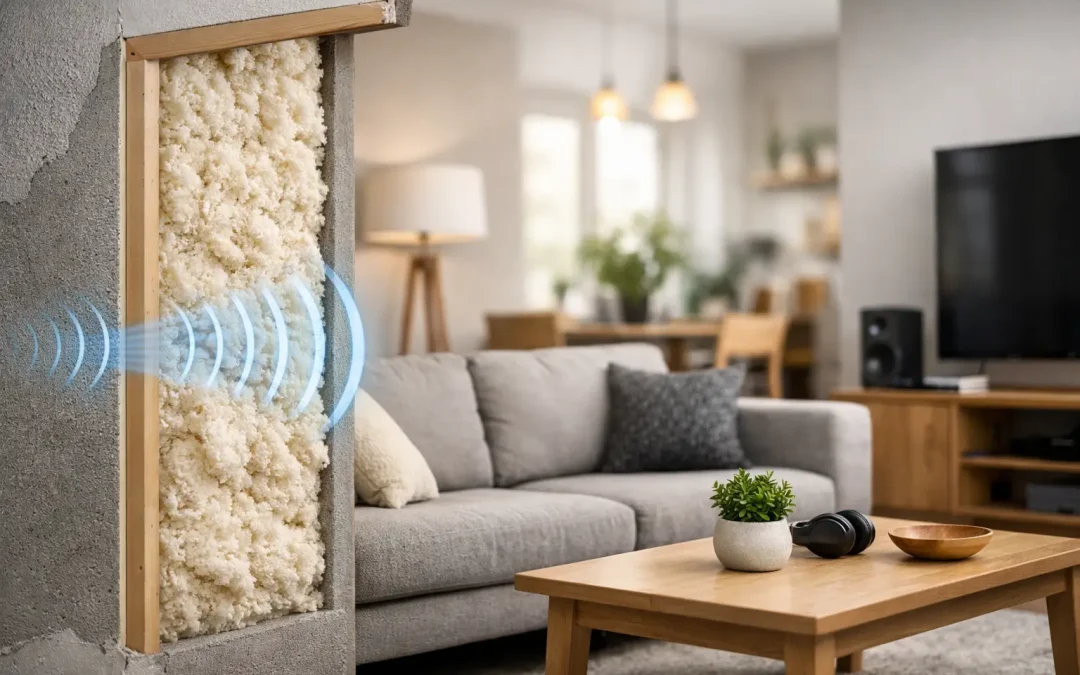
That hollow, echo-prone room usually has the same problem as the noisy bedroom next to a living area – too much air movement and too many hard surfaces letting sound bounce and travel. When people ask how open cell absorbs sound, the short answer is that its soft, air-filled structure helps trap and weaken sound waves before they keep moving through a space.
That matters because sound control is not just about comfort. It affects sleep, privacy, concentration, and how a home or building feels day to day. In a quiet office, media room, bedroom, or shared living space, the right insulation can make the difference between a room that feels calm and one that never quite settles down.
How open cell absorbs sound
Open-cell spray foam has a cellular structure that is less dense than closed-cell foam. Instead of forming a rigid, tightly packed barrier, it creates a softer material filled with tiny interconnected pockets. Those pockets matter because sound travels as vibration through air. When sound waves hit open-cell foam, part of that energy enters the material and gets disrupted as it moves through the maze of cells.
In practical terms, the foam reduces the strength of the sound wave. Rather than reflecting all that energy back into the room, it helps absorb a portion of it. That is why open-cell foam is often associated with less echo, better speech clarity, and reduced noise transfer between certain areas.
This does not mean it makes a room soundproof. That is a common misunderstanding. True soundproofing usually requires a full assembly approach – insulation, drywall strategy, sealing, decoupling, and sometimes added mass. Open-cell foam helps, often significantly, but it works best as one part of a broader wall or ceiling system.
Why the cell structure matters
The word open in open-cell is the key. Because the cells are not sealed shut, air can move into the material instead of bouncing entirely off the surface. That movement inside the foam creates friction and weakens airborne sound energy.
Think of the difference between yelling into a tiled bathroom and speaking in a room with carpet, furniture, and upholstered surfaces. Hard, dense surfaces tend to reflect more sound. Softer, more porous materials tend to absorb more of it. Open-cell foam behaves more like the second category.
This is one reason it is often preferred when sound control is a higher priority. Closed-cell foam has major performance advantages of its own, especially in strength, moisture resistance, and high R-value per inch, but it is denser and more rigid. For noise absorption, open-cell foam is often the better fit.
What kinds of sound it helps with
Open-cell spray foam is most effective on airborne sound. That includes voices, television noise, music, barking dogs, and the general transfer of sound through wall and ceiling cavities. If you are trying to reduce the way noise moves from one room to another, this is where it can help.
It can also improve sound quality inside a room by cutting down on echo and harsh reflection. Large rooms with hard finishes often feel louder than they need to. Adding an absorptive material inside the building assembly can make the space feel more controlled.
Where it is less effective is impact noise. Footsteps from an upstairs room, slamming doors, or vibration from mechanical equipment often involve structural transmission. That kind of sound moves through framing and hard connections, not just through air. In those cases, insulation helps, but it usually will not solve the whole problem by itself.
Where open-cell foam performs best
Interior walls are one of the most common places where sound absorption matters. Bedrooms, bathrooms, home offices, laundry rooms, and shared walls between living spaces can all benefit from better acoustic control. If privacy is the goal, open-cell foam inside these wall cavities can make a noticeable difference.
Ceilings can also benefit, especially under bonus rooms or between floors where airborne sound is an issue. In homes with open layouts, high ceilings, or multipurpose living areas, reducing sound spill can improve comfort without changing the look of the finished space.
For commercial buildings, the same idea applies. Offices, conference rooms, retail spaces, and mixed-use properties often need quieter interiors to function well. When people can hear clearly and work without constant distraction, the building performs better for the people using it.
Sound control and air sealing work together
One reason spray foam stands apart from traditional insulation is that it does more than fill a cavity. It also helps air seal. That matters for comfort and energy efficiency, but it matters for acoustics too.
Air leaks can carry sound. Small gaps around wall penetrations, framing joints, and transitions allow noise to move more easily from one space to another. Because open-cell spray foam expands into cracks and irregular areas, it reduces some of those pathways. The result is not just thermal performance but a tighter, quieter building envelope.
This is where homeowners often notice the biggest real-world benefit. The home feels less drafty, temperatures stay more stable, and rooms tend to feel calmer. The sound improvement is part of a larger performance upgrade, not a standalone gimmick.
What open-cell foam will not do
It is worth being clear here because expectations matter. Open-cell spray foam is not a magic fix for every noise complaint. If a wall has poor framing design, large gaps, thin drywall, or direct vibration paths, foam alone may not deliver the result you want.
It also will not stop every outside noise. Traffic, barking dogs, aircraft, and neighborhood activity can still come through windows, doors, ductwork, and other weak points. If exterior sound is the issue, you have to look at the full building shell.
This is why the right recommendation depends on the problem. If the issue is echo inside a room, the solution may involve multiple surfaces. If the issue is sound transfer between rooms, the wall assembly matters. If the issue is exterior noise, windows and air leakage may be a bigger factor than the insulation itself.
Open cell versus other insulation for sound
Fiberglass and rockwool can also help with sound control, and in some assemblies they perform very well. Rockwool in particular is often chosen for its acoustic properties. So the question is not whether open-cell foam is the only option. It is whether it is the best fit for the building goals.
What sets open-cell spray foam apart is the combination of sound absorption and air sealing in one application. Traditional batt insulation may slow heat transfer and help with sound to a degree, but it does not seal cracks and penetrations the way spray foam does. That added air control can improve both energy performance and acoustic comfort.
The trade-off is cost. Open-cell spray foam is a premium insulation product, and it should be treated like one. For owners focused on long-term performance, comfort, and whole-building efficiency, the value is often there. For someone chasing the lowest upfront number, another material may look more attractive at first.
Why installation quality matters
Even the right product can underperform if it is installed poorly. Gaps, inconsistent thickness, and missed areas reduce both thermal and acoustic performance. Sound finds weak points quickly.
That is why insulation should be approached as a building-performance system, not just a material choice. A contractor who understands airflow, cavity fill, and assembly design will usually deliver a better result than someone treating the job as simple coverage.
In Arizona homes, where heat control is often the first concern, it is easy to overlook acoustics. But when a home is properly insulated and air sealed, the improvement in everyday quiet often becomes one of the most appreciated benefits. Ridgetopp Insulation sees that regularly in projects where comfort, efficiency, and indoor livability all matter.
If you are weighing insulation options, the smartest question is not just which product absorbs sound. It is which system solves the actual problem in your home or building while improving performance across the board. Quiet matters more when you can feel the difference every day.