That cold floor in winter and that musty smell that never quite goes away usually point to the same problem – an underperforming crawl space. If you want to know how to properly insulate a crawl space, the real answer is not just adding insulation. It is choosing the right strategy for your home, controlling moisture first, and creating a tighter building envelope that actually performs.
In Arizona, crawl spaces can be overlooked because people focus on attics and walls first. But a poorly insulated crawl space can pull comfort and efficiency down fast. It can let in outside air, trap moisture, and make your HVAC system work harder than it should. Done right, crawl space insulation helps stabilize indoor temperatures, reduce drafts, improve air quality, and protect the structure above it.
How to properly insulate a crawl space starts with the right approach
The first decision is whether the crawl space should be vented or encapsulated. This matters because the insulation method changes depending on the design. In older homes, you may find vents in the crawl space walls and insulation installed between the floor joists. In a high-performance upgrade, the better move is often to treat the crawl space as part of the conditioned building envelope.
That means sealing the crawl space from outside air, addressing ground moisture, and insulating the crawl space walls instead of only the floor above. This approach usually delivers better energy performance because it reduces air leakage along with heat transfer. It also helps protect plumbing, ductwork, and framing located below the home.
There are cases where insulating the floor system still makes sense. If the crawl space cannot be fully sealed or there are project constraints, floor insulation may be the practical option. But if you want the strongest overall results, a sealed and insulated crawl space usually outperforms a vented one.
Moisture control comes before insulation
Insulation is not a fix for moisture problems. If the crawl space has standing water, visible mold, damp soil, or signs of wood rot, those issues need to be addressed first. Otherwise, you risk trapping moisture where it can keep damaging the home.
Start with drainage. Make sure the grading outside moves water away from the foundation. Gutters and downspouts should direct runoff away from the house, not dump it at the crawl space perimeter. Inside the crawl space, the ground should be covered with a durable vapor barrier. Bare earth constantly releases moisture, and that moisture will work against any insulation system you install.
Air leaks matter too. Outside air entering through vents, gaps, and rim joists can carry moisture with it. In many homes, this is where conventional insulation falls short. Fiberglass can slow heat transfer, but it does not stop airflow. If air keeps moving through the assembly, performance drops and comfort suffers.
The best materials for crawl space insulation
Not every insulation product performs the same way in a crawl space. This is one area of the house where material choice has a major impact on long-term results.
Spray foam is often the top-performing option because it insulates and air seals in one step. Closed-cell spray foam, in particular, is a strong fit for crawl spaces because it offers a high R-value per inch, resists moisture, and adds rigidity to the assembly. When applied to crawl space walls and rim joists, it helps create a tighter, more controlled environment below the home.
Fiberglass batts are common because they cost less upfront, but they come with trade-offs. In a vented crawl space, batts installed under the floor can sag over time, collect dust, and lose effectiveness if exposed to air movement or moisture. They can work when properly installed and protected, but they are not the premium solution for air leakage and moisture control.
Rockwool batts handle moisture better than fiberglass and can be a more durable choice in some floor systems. Still, like fiberglass, they do not air seal on their own. That means you still need a separate strategy for sealing gaps and penetrations.
If the goal is better comfort, lower utility bills, and stronger moisture protection, spray foam usually gives homeowners and builders the most complete result.
How to properly insulate a crawl space wall
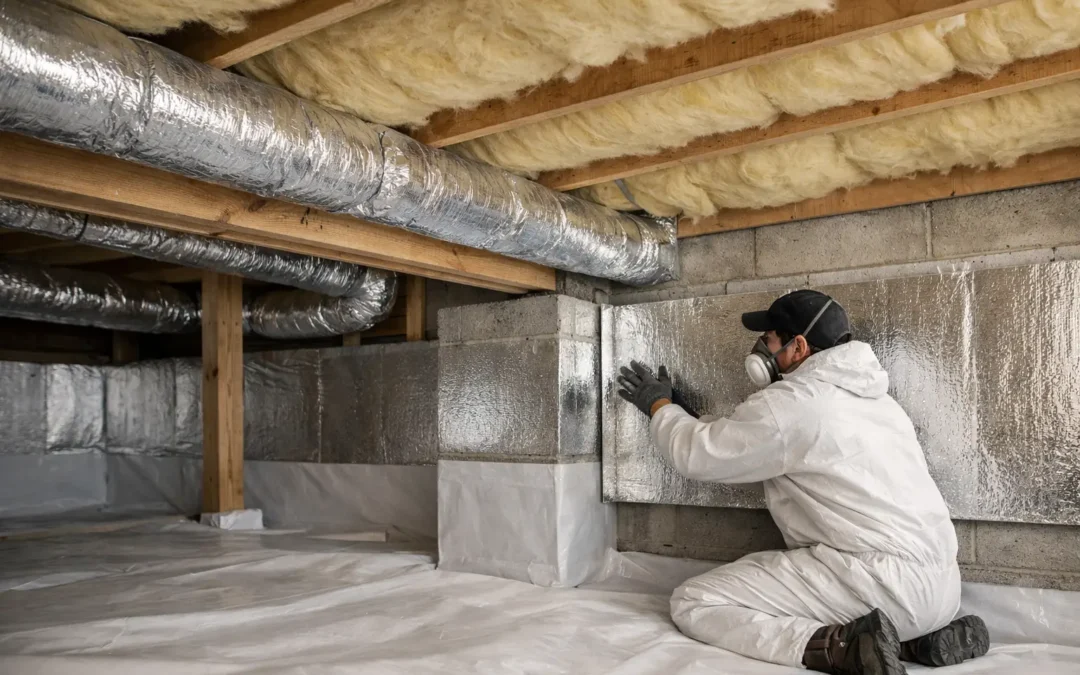
In a sealed crawl space, insulating the perimeter walls is usually the preferred method. This keeps the crawl space closer to indoor conditions and reduces the extreme temperature swings that can affect floors, pipes, and ductwork.
The process starts by sealing vents and other openings to the outside. The walls are then insulated, often with closed-cell spray foam for combined thermal performance and air sealing. The rim joist area should also be sealed and insulated, since this is one of the most common leakage points in the entire house.
The floor of the crawl space should be covered with a vapor barrier that extends across the ground and is properly sealed at seams and edges. In a full encapsulation, that liner is often brought up the wall to help control ground moisture throughout the space.
This wall-insulation method is generally the better system when the crawl space contains HVAC equipment, plumbing lines, or ducts. Instead of exposing those components to extreme heat and cold, you are bringing them into a more stable environment.
When floor joist insulation makes sense
If the crawl space remains vented, insulation is usually installed between the floor joists. The challenge is getting a clean, continuous installation with no gaps, compression, or sagging. Even small voids can lower performance and create cold spots in the floors above.
Before insulating between joists, all penetrations for wiring, plumbing, and ductwork should be sealed. This is critical. Without air sealing, the insulation is doing only part of the job. Then the insulation must be cut and fitted carefully so it stays in full contact with the subfloor.
This approach can improve comfort, but it has limitations. The crawl space itself still experiences outdoor conditions, and anything located in that space remains vulnerable. It is often a compromise solution, not the highest-performing one.
Common crawl space insulation mistakes
The biggest mistake is treating insulation like a standalone fix. If moisture, air leakage, and ground vapor are ignored, even a good insulation product can underperform.
Another common problem is mixing strategies without a clear plan. For example, leaving vents open while trying to create a sealed crawl space usually works against the system. Installing fiberglass under the floor while skipping the rim joist air sealing leaves one of the worst leakage areas untouched.
Poor installation is another issue. Gaps, compressed batts, missing sections, and inconsistent coverage all reduce real-world performance. Crawl spaces are difficult environments to work in, which is one reason professional installation often delivers better long-term value than a patchwork DIY job.
What Arizona homeowners should keep in mind
Arizona homes deal with more than just heat. Temperature swings, dust, monsoon moisture, and dry-season air leakage all affect how a crawl space performs. The right insulation system has to manage both thermal flow and air movement.
That is why premium insulation systems tend to stand out here. A crawl space that is properly sealed and insulated can help keep indoor temperatures more consistent year-round. It can also reduce the dusty, drafty conditions that make a house feel less comfortable even when the thermostat says otherwise.
For homeowners focused on long-term value, this is not just about adding R-value. It is about creating a healthier, more efficient structure from the ground up.
Should you DIY or hire a pro?
Some crawl space projects look simple from the access hatch, then get complicated fast. Low clearances, hidden moisture issues, wiring obstacles, and uneven framing all make installation harder than expected. The stakes are higher when the wrong approach can trap moisture or leave major air leaks in place.
A professional insulation contractor can evaluate whether your crawl space should be vented, sealed, or fully encapsulated. They can also recommend the right material based on the home, the climate, and the performance you want. For many property owners, especially those planning to stay in the home, better installation quality pays off in comfort and lower operating costs.
If you are serious about doing the job right, focus less on the cheapest material and more on the full system. Good crawl space insulation should air seal, manage moisture, and hold up over time. That is where the real performance comes from.
A crawl space is easy to ignore because it is out of sight, but it has a direct impact on how your home feels every day. When it is insulated the right way, you notice the difference upstairs – warmer floors, fewer drafts, cleaner air, and a house that works smarter instead of harder.