When a room stays too hot in summer, too cold in winter, or too noisy year-round, the insulation choice starts to matter fast. Rockwool batt insulation benefits stand out in places where fire resistance, sound control, and reliable thermal performance matter more than buying the cheapest product on the shelf.
For homeowners and builders, that makes rockwool worth a serious look. It is not the right answer for every assembly, and it does not replace the air-sealing power of spray foam, but in the right application it delivers real performance that lasts.
What rockwool batt insulation is
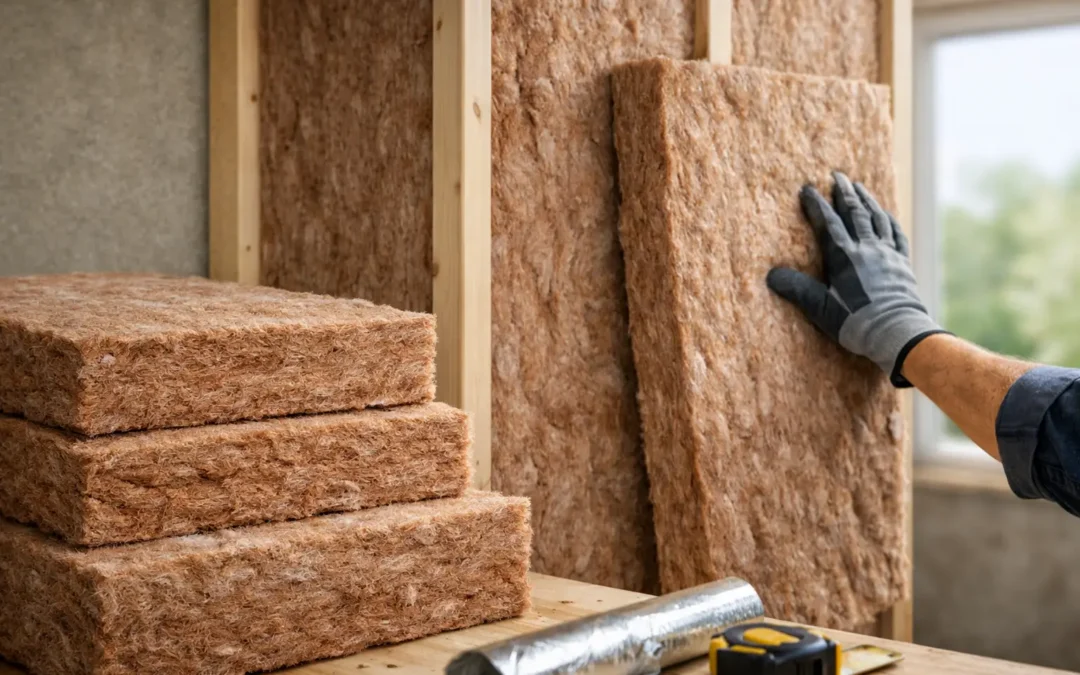
Rockwool batt insulation is made from mineral wool spun into dense fibers and formed into semi-rigid batts sized to fit between framing members. Compared to standard fiberglass batts, it feels heavier, more durable, and less prone to slumping or falling apart during installation.
That density is a big part of its appeal. It helps the material hold its shape in wall cavities, resist heat flow, and reduce sound transfer better than many lighter batt products.
The biggest rockwool batt insulation benefits
The best way to understand rockwool batt insulation benefits is to look at what the material actually does well in the field, not just what the packaging says.
Strong thermal performance
Rockwool offers solid R-value per inch and performs consistently when installed correctly. Because the batts are dense and cut to friction-fit into framing cavities, they can create a more complete fill than lower-density products that compress, sag, or leave gaps.
That matters in exterior walls, floors over garages, bonus rooms, and other spaces where comfort complaints usually show up first. Better cavity fill helps slow heat transfer, which can reduce strain on heating and cooling equipment and improve room-to-room consistency.
Still, thermal resistance is only one part of the story. If air is leaking around top plates, electrical penetrations, rim joists, or poorly sealed framing joints, even a good batt product can only do so much.
Excellent sound control
One of the most noticeable advantages of rockwool is sound reduction. Its density helps absorb sound within wall and floor assemblies, which makes it a smart choice for interior walls around bedrooms, bathrooms, laundry rooms, and home offices.
In multi-family construction or mixed-use buildings, that same sound control can be a major quality upgrade. You may not see it after drywall goes up, but you will hear the difference every day.
For homeowners, this is often one of the most immediate payoffs. A quieter room feels more comfortable even when the thermostat setting never changes.
Fire resistance
Rockwool is noncombustible and handles high temperatures far better than many other insulation materials. That does not make a building fireproof, but it can add an important layer of protection in wall, ceiling, and floor assemblies.
This benefit tends to matter most in garages, mechanical rooms, multifamily separations, and commercial spaces where fire-rated assemblies may be part of the design. For homeowners, it also offers peace of mind in areas where added fire resistance is a priority.
Moisture resistance
Rockwool does not absorb water the way some materials can, and it dries out more effectively if it gets damp. That makes it useful in assemblies where occasional moisture exposure is a concern.
That said, moisture resistance should not be confused with air sealing or vapor control. If an assembly has ongoing condensation, bulk water intrusion, or humid air leakage, the real fix is to address the source. Insulation can help, but it cannot correct a building envelope problem by itself.
Durability and fit
Another reason contractors like rockwool is that it is more rigid than fiberglass batt insulation. It cuts cleanly, fits snugly, and tends to stay where it is placed.
That helps reduce voids inside framing cavities, especially around pipes, wires, and irregular areas. Installation quality still matters, but the product itself is more forgiving than some lighter batt options.
Where rockwool batt insulation makes the most sense
Rockwool is not a one-size-fits-all solution. It performs best in specific locations where its strengths line up with the demands of the assembly.
Exterior walls are a common use because they benefit from the material’s thermal performance and sound control. Interior partitions are another strong application, especially when privacy and noise reduction matter. Floor systems between levels can also benefit, particularly over garages or between living space and utility areas.
In some projects, rockwool is chosen because it offers a better batt option without moving all the way to spray foam. In others, it is selected for targeted upgrades where sound or fire resistance matters more than whole-house air sealing.
Where spray foam still has the edge
This is where homeowners and builders need a straight answer. Rockwool has real strengths, but it does not air seal. If uncontrolled air leakage is the main reason a home feels drafty, dusty, uneven, or expensive to heat and cool, spray foam usually delivers a higher level of performance.
Spray foam insulates and air seals in one step. That makes it especially valuable in attics, crawl spaces, rim joists, and complex assemblies where gaps and leakage paths are hard to control with batt products alone.
For many Arizona homes, especially in areas with intense sun, wide temperature swings, and seasonal dust, stopping air movement can be just as important as adding R-value. A batt insulation product can perform well inside a well-sealed assembly, but it cannot stop infiltration on its own.
That is why the best recommendation often depends on the part of the building you are insulating. Rockwool may be an excellent choice for interior sound walls or certain exterior wall cavities, while spray foam may be the better investment in an attic or crawl space where air leakage is a major issue.
Rockwool batt insulation benefits compared to fiberglass
If the comparison is rockwool versus fiberglass batts, rockwool usually comes out ahead in density, sound control, fire resistance, and overall rigidity. It generally feels like a more premium batt product because it fits more securely and holds up better during installation.
Fiberglass can still be a practical option when budget is the top concern and the installation is done carefully. But if the goal is a higher-performing batt with better acoustic and fire characteristics, rockwool is often the stronger choice.
The trade-off is cost. Rockwool typically costs more than fiberglass, so the question becomes whether those added benefits matter in that specific area of the building. In a media room, bedroom wall, or garage separation, they often do. In a basic partition where performance demands are low, the upgrade may not be as compelling.
Installation quality matters more than most people think
Even the best insulation underperforms when it is installed poorly. Gaps, compression, misalignment, and unsealed penetrations can all reduce real-world results.
With rockwool batts, proper sizing and clean cuts matter. The batts should fully contact the framing cavity without being stuffed too tightly or left loose. Around outlet boxes, plumbing, and wiring, the material should be split and fitted rather than simply pushed behind obstacles.
This is one reason professional installation still matters. Product choice is important, but execution is what determines whether you actually get the comfort, efficiency, and sound control you paid for.
Is rockwool right for your project?
If you want better sound control, added fire resistance, and a more durable batt insulation product, rockwool is a strong option. It fits well in wall cavities, performs reliably, and offers a noticeable upgrade over standard fiberglass in many applications.
If your biggest problems are drafts, air leakage, moisture movement from unsealed building cavities, or high energy bills tied to infiltration, spray foam may be the better answer. In many homes and commercial buildings, the right solution is not choosing one material for everything. It is choosing the right insulation for each part of the structure.
That is the practical way to look at insulation performance. Materials are tools, and the best results come from matching the tool to the job. If you are weighing options for a new build, remodel, or targeted upgrade, start with the real problem you want to solve, because the best insulation decision is the one that fixes that problem for the long term.