If you have cold floors in winter, musty smells after a monsoon, or rising utility bills that never seem to make sense, your crawl space may be part of the problem. Crawl space insulation and vapor barrier cost can vary quite a bit, but the real question is what you are actually getting for that price: basic coverage, or a system that helps control air leakage, moisture, and energy loss for years.
For many homeowners, the cheapest number on a quote looks appealing until the crawl space still feels damp, the house still drafts, and the HVAC system keeps working harder than it should. That is why cost needs to be tied to performance. In a crawl space, insulation and moisture control work together. If one is done poorly, the other often underperforms.
What affects crawl space insulation and vapor barrier cost?
The biggest cost factor is the size and condition of the crawl space. A clean, dry area with easy access is always less expensive to insulate than one with debris, standing moisture, sagging old insulation, or tight working conditions. Labor matters here because crawl spaces are difficult environments, and prep work often takes longer than property owners expect.
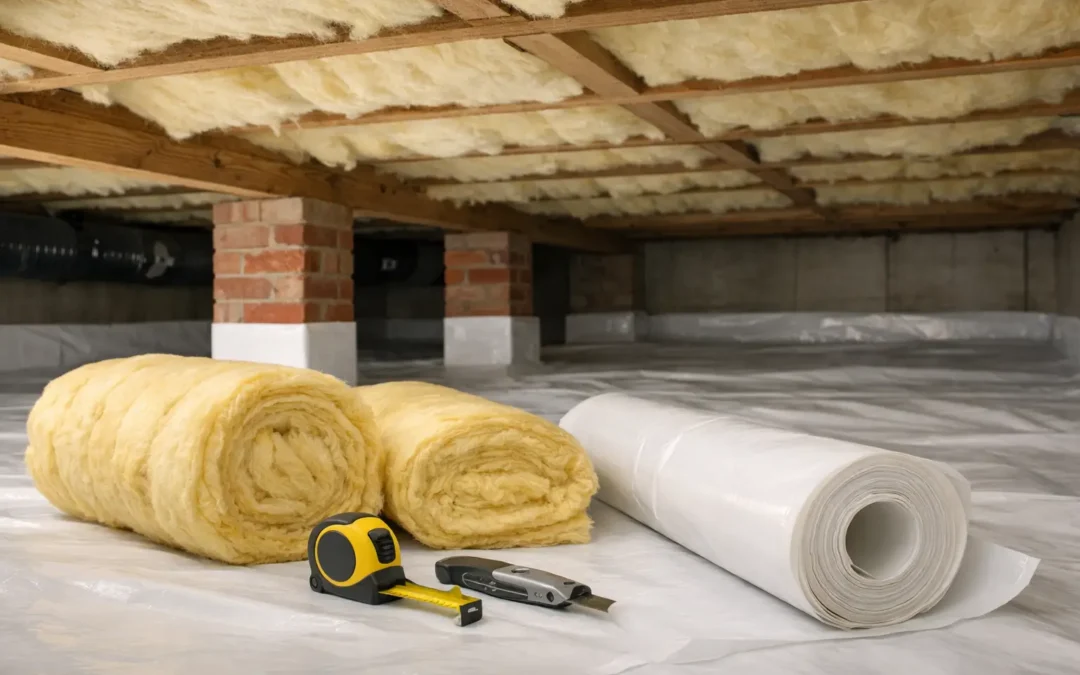
Material choice also changes the price significantly. Fiberglass batt insulation usually has a lower upfront cost, but it does not air seal and can lose effectiveness if moisture gets into it. Spray foam costs more at the start, yet it insulates and air seals in one application. In a crawl space, that difference can matter a lot because outside air, ground moisture, and duct leakage often meet in the same place.
The vapor barrier itself has cost variables too. Thin plastic is cheaper, but thicker reinforced material is more durable and better suited for long-term moisture control. A vapor barrier that simply covers part of the ground is not the same as one that is properly fitted, sealed at seams, and extended up foundation walls where appropriate.
You also have to account for whether the job includes removal of old insulation, cleaning, mold concerns, minor repairs, pest-related issues, or air sealing around penetrations. Those are not extras in the sales sense. In many crawl spaces, they are what make the insulation system actually work.
Typical crawl space insulation and vapor barrier cost ranges
For a basic project, homeowners may see lower-end pricing when the crawl space is accessible, dry, and in good condition, and when the scope is limited to simple ground coverage and conventional insulation. In many markets, smaller basic installations can start in the low thousands.
A more complete project with higher-quality materials, thicker vapor barrier, insulation upgrades, and detailed air sealing will usually land higher. When spray foam is part of the assembly, the total cost typically increases, but so does the level of performance. Depending on square footage, crawl space condition, and whether the walls, rim joist, or subfloor are being insulated, many full-system projects fall somewhere in the mid to upper thousands.
That broad range is not contractor vagueness. It reflects the fact that two crawl spaces with the same square footage can require very different work. One may be dry and clean. The other may need old wet fiberglass removed, ground moisture addressed, and difficult access managed before any new material goes in.
Why the cheapest option often costs more later
A crawl space is not a place where bargain materials hide their weaknesses for long. If insulation absorbs moisture, sags, or leaves major air gaps, you may still deal with cold floors, uneven temperatures, and ongoing humidity issues. That often leads to repeat service calls, early replacement, or higher utility costs month after month.
This is especially true in climates where temperature swings are real and moisture events are seasonal. In Arizona, many property owners think only about heat, but crawl spaces can also collect moisture after storms and during humid periods. Once that moisture gets into the wrong insulation material, performance drops fast.
A low-cost vapor barrier installation can have the same problem. If seams are loose, edges are not secured properly, or the material is too thin to hold up, the barrier may not do much beyond making the crawl space look finished for a short time. Moisture control is not about putting plastic on the dirt and hoping for the best. It is about creating a more controlled environment under the home.
Spray foam vs. traditional insulation in a crawl space
This is where cost and value separate. Fiberglass and other traditional materials can work in the right assembly, but they do not deliver the same air sealing performance as spray foam. In a crawl space, air movement is a major part of the problem. If outside air is moving through gaps and around penetrations, insulation alone cannot fully solve it.
Closed-cell spray foam is often the premium option because it adds insulation value, helps reduce air leakage, and offers strong moisture resistance. That can make it a very effective choice for crawl space walls, rim joists, and other areas where condensation or humid air may be a concern. Open-cell foam has its uses in certain applications, but in crawl spaces, closed-cell is often favored when moisture control and durability are priorities.
The upfront price of spray foam is higher than batt insulation. There is no point pretending otherwise. But for homeowners and builders focused on long-term performance, lower energy waste, and a tighter building envelope, it can be the better investment. A lower bill at installation is not always a lower-cost decision over the life of the home.
Should you insulate the crawl space floor or the walls?
It depends on whether the crawl space is vented or being treated more like a conditioned space. Insulating the floor above the crawl space is common in older vented setups, but that approach leaves the crawl space itself exposed to outside conditions. Pipes, ducts, and framing below the house still deal with temperature swings and moisture challenges.
Insulating the crawl space walls instead, combined with a properly installed vapor barrier and air sealing strategy, often creates a better-performing system. It helps bring the crawl space closer to the home’s interior conditions rather than leaving it as a harsh, uncontrolled zone. That approach can cost more upfront, but it usually delivers better moisture management and more stable comfort above.
This is one of those areas where a site-specific evaluation matters. The right answer depends on the existing design, the condition of the crawl space, and what performance problems you are trying to solve.
What should be included in a quality quote?
When reviewing pricing, do not just compare totals. Look at what the contractor plans to do. A quality quote should explain whether old material will be removed, what insulation type and thickness will be installed, what vapor barrier thickness is included, and whether seams and edges will be sealed.
It should also clarify if air sealing is part of the job, whether wall insulation or subfloor insulation is recommended, and if any moisture-related prep is required before installation. If one quote is dramatically cheaper, there is usually a reason. Sometimes it is efficiency. More often, it is missing scope.
For homeowners who want durable results, the best quote is not the one with the lowest starting number. It is the one that addresses the actual conditions under the home and matches the insulation system to those conditions.
When the higher price makes sense
If your crawl space has persistent humidity, comfort complaints, or energy loss, paying more for a better system can be the smarter move. Premium materials and careful installation may help reduce drafts, stabilize indoor temperatures, protect against moisture damage, and support healthier indoor air. Those benefits are hard to measure from a line-item price alone, but they show up in how the house feels and performs.
That is why many contractors who focus on building performance recommend looking beyond the material cost per square foot. The better question is whether the system will solve the problem. If it does, the investment often makes sense.
A crawl space should not be ignored just because it is out of sight. If the area below your home is damp, underinsulated, or poorly sealed, it will keep affecting the rooms above it. The right insulation and vapor barrier plan costs more than a quick fix, but it also has a much better chance of feeling like money well spent every season.