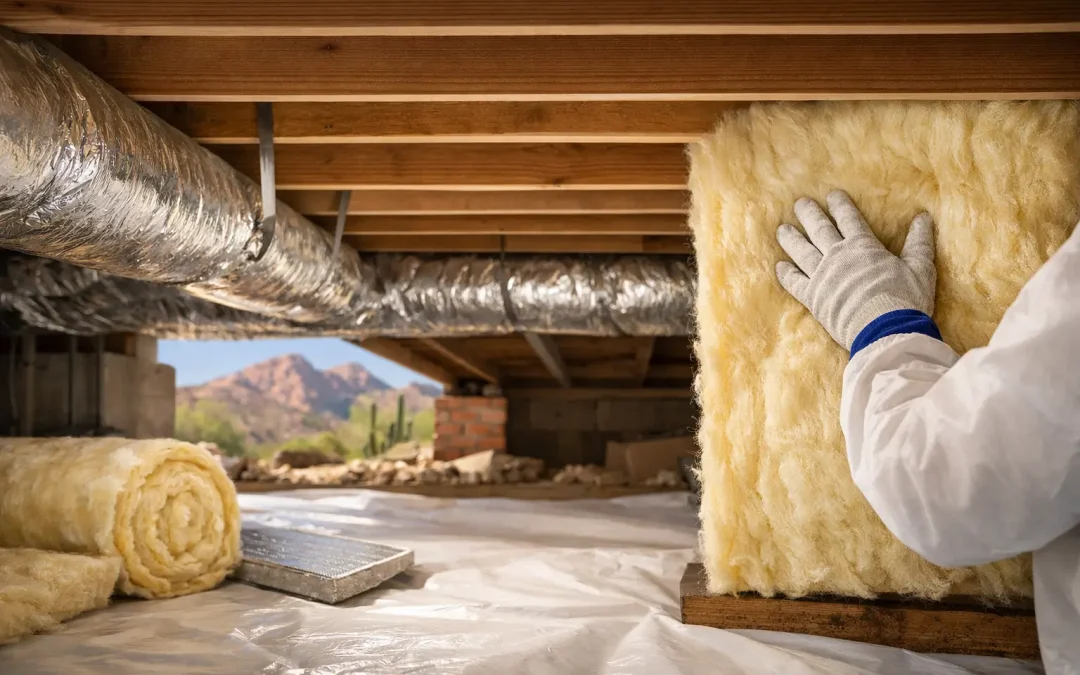
A cold floor in winter, a musty smell after rain, and rooms that never seem to match the thermostat often point to the same overlooked area: the crawl space. Arizona crawl space insulation is not just about adding R-value beneath the floor. Done correctly, it helps control air movement, moisture, and temperature swings at one of the most vulnerable parts of the home.
That matters across Arizona. A home in Payson or the Rim country can face freezing winter nights, while lower-elevation areas deal with long cooling seasons and intense heat. In both cases, an uninsulated or poorly sealed crawl space can make the living space above it harder and more expensive to heat and cool.
Why Crawl Spaces Affect the Whole House
A crawl space sits directly below your finished floors, but it is still part of your building envelope. If outside air, damp soil moisture, or hot attic-like air enters this area unchecked, it influences the rooms where your family lives.
Conventional floor insulation can slow heat transfer, but insulation alone does not stop air leakage. Gaps around plumbing lines, duct penetrations, rim joists, access doors, and framing connections allow outside air to move into the crawl space and through the home. That is why homeowners can install fiberglass batts and still feel drafts or cold floors.
The right system addresses both insulation and air sealing. It also considers whether the crawl space should remain vented or be brought inside the home’s conditioned envelope. The best approach depends on the structure, local conditions, existing moisture concerns, duct location, and how the space was originally built.
Arizona Crawl Space Insulation Starts With Moisture Control
Arizona is dry compared with many parts of the country, but dry air does not eliminate crawl space moisture problems. Ground moisture can rise through exposed soil. Monsoon storms can direct water toward the foundation. Plumbing leaks, poor grading, blocked drainage, and humid air entering a cool crawl space can all create conditions for odors, wood damage, and mold growth.
Before choosing insulation, identify where moisture is coming from. No insulation product should be used as a substitute for repairing a leak or correcting standing water. If water is entering from outside, the drainage and grading issue needs attention first. If the crawl space has exposed soil, a properly installed ground vapor barrier can reduce moisture migration from below.
Air sealing matters here as much as thermal performance. When humid outdoor air is allowed to enter a cooler crawl space, condensation can develop on ducts, pipes, and framing surfaces. A sealed and properly insulated crawl space reduces that risk while making the area less connected to outdoor conditions.
Vented vs. Encapsulated Crawl Spaces
Many older homes use vented crawl spaces. The traditional idea was simple: vents would allow moisture to escape. In practice, vents also allow hot, cold, dusty, and sometimes humid outside air to enter. They can bring in pests and make the floor system above more difficult to control.
For many Arizona homes, a closed or encapsulated crawl space offers better whole-home performance. This strategy typically includes sealing outside vents as appropriate, installing a ground vapor barrier, air sealing key leakage points, and insulating the crawl space perimeter walls rather than only the floor above. When ducts and plumbing are located in the crawl space, bringing that area closer to conditioned space can be especially valuable.
Encapsulation is not automatic for every home. A crawl space with active water intrusion, damaged framing, or a combustion appliance may need additional assessment and corrections. The goal is not to close up a problem. The goal is to create a dry, controlled space that supports the rest of the house.
Why Spray Foam Is a Strong Crawl Space Solution
Spray foam is a premium insulation choice because it combines insulation and air sealing in one application. It expands into irregular gaps and adheres to masonry, wood, and other suitable surfaces. That makes it highly effective around rim joists, penetrations, foundation walls, and difficult framing details where batts can leave gaps.
Closed-cell spray foam is often the preferred choice for crawl space walls and rim joists. It delivers a high R-value per inch, resists moisture, and creates a durable air barrier. Its rigidity can also add strength to certain assemblies. Where space is limited, its high thermal performance is a major advantage.
Open-cell spray foam can be useful in some building areas, but it is generally more vapor permeable and is not always the right fit for below-floor environments with moisture exposure. Product selection should follow the assembly, the climate zone, the foundation type, and the moisture-control plan rather than a one-size-fits-all rule.
Fiberglass or rockwool batts may make sense for certain floor systems and budgets, particularly when the crawl space will remain vented. However, they need careful installation. Batts that sag, get wet, or leave gaps around joists lose effectiveness quickly. They also do not provide the air-sealing benefit that spray foam delivers.
What a High-Performance Crawl Space Project Includes
A good crawl space insulation project begins with inspection, not a product quote. The contractor should look for moisture staining, pest activity, duct leakage, damaged insulation, open penetrations, exposed soil, and signs that outside air is moving freely through the space.
From there, the work may include several connected steps:
- Repairing known water or plumbing issues before insulation is installed.
- Sealing gaps at rim joists, pipe penetrations, wiring openings, and access points.
- Installing a ground vapor barrier where exposed soil is contributing moisture.
- Applying the selected insulation to perimeter walls, rim joists, or the floor system based on the design.
- Addressing access doors, ducts, and ventilation details so the crawl space performs as a complete system.
This sequence matters. Installing insulation without air sealing leaves the same pathways for outside air. Sealing the crawl space without accounting for moisture sources can trap conditions that need to be corrected. Building performance comes from the entire assembly working together.
The Benefits You Notice Upstairs
The most immediate difference is often comfort. Floors feel less cold during mountain winters and less affected by outdoor heat during summer. Rooms above the crawl space become easier to keep at a consistent temperature, and the HVAC system does not have to work as hard to overcome heat gain, heat loss, and air leakage below the home.
Homeowners may also notice fewer drafts, less dust infiltration, and a reduction in musty odors. When ducts run through a crawl space, improving that environment can help protect conditioned air before it reaches the rooms you are paying to cool or heat.
Energy savings vary. A home with severe air leakage, exposed ducts, and failing insulation has more to gain than a newer home with a well-built foundation system. Utility rates, thermostat habits, HVAC efficiency, and the size of the insulated area all affect the result. Still, crawl space improvements are often among the most meaningful upgrades for comfort and building durability because they correct problems at the envelope level.
When to Replace Crawl Space Insulation
Crawl space insulation should be evaluated if you see sagging batts, fallen material, rodent damage, damp insulation, mold-like staining, or exposed floor framing. A persistent odor, cold floor, high utility bill, or frequent HVAC cycling can also justify an inspection.
Do not assume that adding another layer over old material is the answer. Wet or contaminated insulation should usually be removed. If the existing installation is hiding air leaks or a moisture problem, covering it can make diagnosis harder and leave the underlying issue unresolved.
For builders and remodelers, crawl space insulation should be planned before finishes make access more difficult. Correctly detailing the foundation, vapor control, insulation location, and air barrier during construction is usually more cost-effective than correcting performance issues after occupancy.
Choose a System, Not Just an Insulation Material
The lowest upfront price is not always the lowest lifetime cost. A basic batt installation may cost less initially, but it can fall short if the crawl space remains drafty, damp, or connected to outdoor air. A properly designed spray foam and moisture-control approach costs more at the start, yet it can provide stronger air sealing, dependable thermal performance, and long-term protection for the home.
For Arizona property owners, the practical question is not simply, “What insulation should go under my floor?” It is, “What will make this crawl space dry, sealed, durable, and easier to condition?” A professional evaluation can identify the right answer before small comfort issues become expensive repairs.