A blistering attic can push heat into living spaces long after the sun is off the roof. That is why homeowners often ask about attic insulation vs radiant barrier as if they are interchangeable upgrades. They are not. Each addresses heat movement differently, and choosing the wrong one can leave a home uncomfortable, drafty, and expensive to cool.
For most Arizona homes, insulation is the foundation of attic performance. A radiant barrier can be a useful addition in the right roof assembly, but it does not replace the thermal resistance, air control, and comfort benefits of a properly insulated attic.
Attic Insulation vs Radiant Barrier: The Core Difference
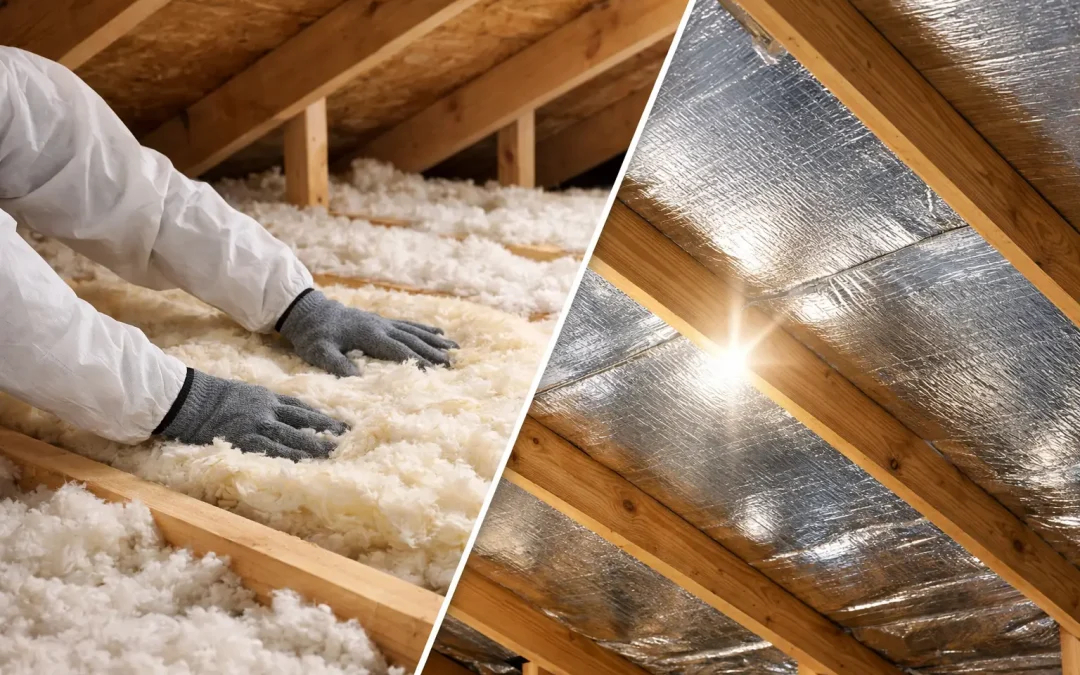
Attic insulation slows conductive heat flow. In plain terms, it resists heat moving through the ceiling, roofline, walls, and other building materials. Its effectiveness is measured in R-value. The higher the R-value, the better the material resists heat transfer when it is installed correctly.
A radiant barrier works differently. It is typically a reflective foil material installed beneath roof decking or across parts of an attic. Rather than providing meaningful R-value on its own, it reflects radiant heat from the hot roof surface. It needs an adjacent air space to work as intended.
That distinction matters. Insulation helps reduce heat loss during cold weather and heat gain during hot weather. A radiant barrier mainly targets solar-driven radiant heat, which is strongest when a roof is exposed to intense sun. It does not stop air leaks, fill gaps around penetrations, or keep winter heat from escaping through an underinsulated ceiling.
Why Insulation Usually Delivers the Bigger Result
Arizona is known for hot summers, but homes in Payson and the Rim country also face cold nights, winter heating demands, and wide temperature swings. An attic solution has to perform through all of it.
Adequate attic insulation helps keep conditioned air where it belongs. In summer, it slows heat traveling from the attic into the rooms below. In winter, it reduces heat loss through the ceiling. It also improves surface temperatures inside the home, which can make rooms feel more even and comfortable without constantly adjusting the thermostat.
The best insulation projects also address air leakage. Small openings around recessed lights, plumbing penetrations, attic hatches, top plates, duct chases, and wiring holes can add up to a major comfort problem. Warm or cool indoor air escapes through those openings, and outside air is pulled in to replace it. Fiberglass or blown-in insulation can provide good R-value, but it does not reliably air seal those gaps by itself.
This is where spray foam insulation has a clear performance advantage. Open-cell or closed-cell spray foam can insulate and air seal in one application. When applied to the right areas of the building envelope, it reduces drafts, improves HVAC efficiency, and helps create a more controlled indoor environment. Closed-cell foam also offers added moisture resistance and a higher R-value per inch, making it especially valuable where space is limited or moisture control is a priority.
What a Radiant Barrier Can Do Well
A radiant barrier is not a bad product. It simply needs to be used for the job it is designed to do.
In a vented attic with substantial roof exposure, a properly installed radiant barrier can reduce radiant heat from the roof deck into the attic. That may lower attic temperatures and reduce the heat load on ductwork and insulation below. Homes with air-conditioned ducts running through a very hot attic may see a noticeable benefit when the entire attic system is addressed correctly.
Radiant barriers are often most useful when they are installed under the roof decking during new construction or a reroofing project. At that stage, the material can be placed cleanly and continuously without creating access problems or blocking ventilation paths.
They can also make sense as a supplemental upgrade in homes that already have proper air sealing and sufficient insulation. If the attic floor is underinsulated, however, spending on a radiant barrier first is usually putting the secondary upgrade ahead of the essential one.
A radiant barrier has real limitations
Reflective material does not seal air leaks. It does not provide enough resistance to conductive heat flow to serve as attic insulation. It does not correct thin, compressed, wet, or poorly installed fiberglass. It also does not solve duct leakage, roof leaks, or ventilation problems.
Performance can decline if a foil surface becomes coated in dust. Installation details matter too. A radiant barrier needs the proper air gap, and careless installation can interfere with attic access, electrical work, or ventilation. Stapling foil across a finished attic without a clear plan is rarely the same as building a well-designed thermal envelope.
The Right Choice Depends on Your Attic Design
The most effective option depends on where your home’s thermal boundary is located.
In a traditional vented attic, the thermal boundary is usually the attic floor. The practical approach is to air seal the ceiling plane, improve insulation depth to the appropriate R-value, and make sure ducts are insulated and sealed. A radiant barrier may be considered afterward if summer roof heat remains a meaningful concern.
In an unvented or conditioned attic, insulation is installed along the roofline rather than on the attic floor. Spray foam is often selected for this application because it follows the roof deck, seals irregular framing cavities, and helps bring attic ductwork inside a more controlled space. This can be a strong option for homes with complex roofs, HVAC equipment in the attic, or persistent comfort issues tied to extreme attic temperatures.
The roofline approach is not automatically right for every property. It requires careful design, correct foam thickness, attention to ignition-barrier requirements, and a plan for moisture management. A qualified insulation contractor should evaluate the roof assembly rather than treating every attic the same.
When Combining Both Makes Sense
There are situations where attic insulation and a radiant barrier work well together. The key is understanding that they have different roles.
A homeowner may air seal and insulate the attic floor, then add a radiant barrier under new roof decking to reduce solar heat in the vented attic. Another property may use spray foam at the roofline to create a conditioned attic, where a separate radiant barrier is generally less critical because the foam is already controlling heat transfer at the roof deck.
For a metal building, radiant heat can be especially intense because metal roofing transfers solar heat quickly. In that setting, closed-cell spray foam applied beneath the roof can provide a more complete solution than a reflective layer alone. It adds insulation, air sealing, and condensation control instead of addressing only radiant heat.
Start With an Attic Assessment, Not a Product Pitch
The first question should not be, “Which material is cheaper?” It should be, “Where is this home losing energy and comfort?” A good attic assessment looks at insulation depth and condition, air leakage, duct placement, roof configuration, moisture signs, ventilation, and the location of HVAC equipment.
Watch for uneven room temperatures, high summer cooling bills, cold ceilings in winter, dusty indoor air, insulation that looks thin or matted, and exposed ductwork in a punishingly hot attic. These symptoms often point to a larger building-envelope issue than a radiant barrier alone can fix.
For homeowners who want dependable year-round performance, start with air sealing and insulation. Add a radiant barrier only when the roof design, solar exposure, and attic conditions support it. Ridgetopp Insulation helps property owners make that call based on how the building actually performs, not on a one-size-fits-all recommendation.
A cooler attic can be helpful, but the real goal is a more comfortable, efficient home below it. Build the thermal boundary correctly first, and every other attic upgrade has a better chance to pay off.