A 1950s home can have thick plaster walls, solid framing, and plenty of character – then feel freezing in one bedroom and stifling in another. The best insulation for older homes is not simply the material with the highest R-value. It is the system that addresses the real source of discomfort: air leaks, under-insulated attics, open crawl spaces, poorly sealed ducts, and moisture moving through the building envelope.
For many older homes in Arizona, spray foam delivers the strongest overall performance because it insulates and air seals at the same time. But each part of an older house has different needs. The right solution starts with understanding where the home is losing energy and how its walls, attic, foundation, and roof were built.
Why Older Homes Need a Different Insulation Strategy
Older homes were often built before modern energy codes required continuous insulation, air barriers, or careful moisture control. Even a house with existing fiberglass may still leak conditioned air through gaps around wiring, plumbing penetrations, top plates, attic hatches, rim joists, and ductwork.
That is why adding more conventional insulation alone does not always solve the problem. Fiberglass can slow heat transfer, but it does not stop air from moving through gaps around it. When hot summer air, cold winter air, dust, and outdoor pollutants can enter freely, the HVAC system has to work harder to maintain a comfortable temperature.
A better insulation plan considers both R-value and air sealing. R-value measures resistance to heat flow. Air sealing controls the movement of air, which is often the larger source of wasted energy and drafts in an older home. Address both, and homeowners typically see more consistent room temperatures, lower heating and cooling demand, and a quieter indoor environment.
Best Insulation for Older Homes: Spray Foam
Spray foam is often the premium choice for older homes because it expands into cracks, joints, and irregular cavities that are difficult to seal with batt insulation. It creates a continuous barrier that limits air leakage while adding meaningful thermal performance.
Open-cell spray foam for interior cavities and attics
Open-cell spray foam is lighter, more flexible, and effective at filling hard-to-reach spaces. It is commonly used in attic rooflines, interior wall cavities, and other areas where air sealing is the primary goal. Its expansion helps close the small gaps common in older framing, including uneven lumber and penetrations left by past renovations.
For a home with ductwork in the attic, insulating the roofline with open-cell foam can bring that ductwork into a more controlled space. That can reduce heat gain from the attic and help the air conditioning system operate more efficiently. In Rim Country, where temperatures can swing sharply between day and night, that improved control can make a noticeable difference in comfort.
Open-cell foam is vapor permeable, so the full assembly still needs to be evaluated for local conditions, roof design, and moisture management. It is not a one-size-fits-all answer for every wall or crawl space.
Closed-cell spray foam for moisture-prone areas
Closed-cell spray foam has a higher R-value per inch and forms a much denser, more moisture-resistant layer. It is an excellent option for crawl spaces, rim joists, foundation walls, metal buildings, and areas where space is limited but high performance is needed.
Older homes with vented or damp crawl spaces can benefit substantially from closed-cell foam applied to foundation walls or the underside of the floor, depending on the design. It helps reduce drafts coming up through the flooring and limits moisture that can contribute to musty odors, mold risk, and wood deterioration.
Closed-cell foam costs more upfront than fiberglass or blown-in insulation. The trade-off is stronger air control, moisture resistance, and high R-value in a thinner application. For homeowners focused on long-term energy performance and building durability, that added value often justifies the investment.
When Fiberglass or Rockwool Makes Sense
Spray foam is not the only effective insulation material. In the right location, fiberglass and rockwool can perform well, especially when installed after thorough air sealing.
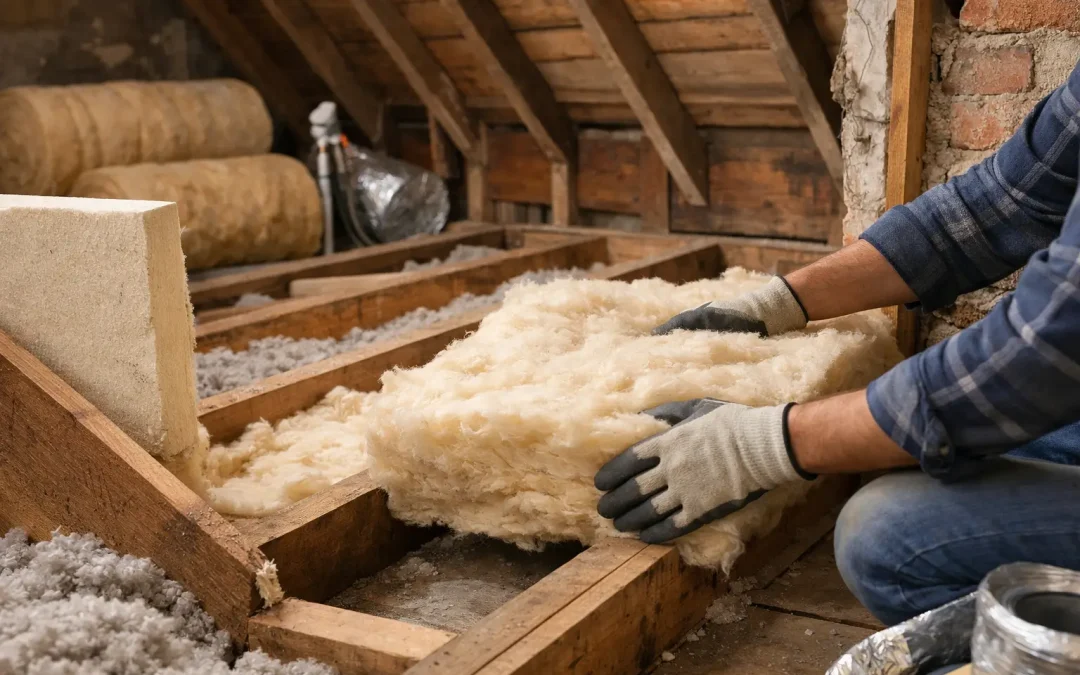
Fiberglass batts are a practical option for accessible wall cavities, floor systems, and new construction areas. They are affordable and familiar, but installation quality matters. Batts must fit snugly around pipes, wiring, and framing without being compressed, folded, or left with gaps. A poorly installed batt system can leave large pathways for air movement.
Blown-in fiberglass can be a good choice for an attic floor once air leaks have been sealed. It adds coverage over irregular ceiling framing and can raise attic R-value efficiently. This approach is often cost-effective when an attic is accessible and the goal is to improve thermal performance without converting the attic into conditioned space.
Rockwool batts offer strong fire resistance, sound control, and moisture tolerance. They are especially useful in walls, between floors, and around mechanical areas where acoustic comfort matters. Rockwool does not absorb water easily, but it still needs a properly designed air and moisture control strategy around it.
The key distinction is simple: fiberglass and rockwool are insulation products, while spray foam is both insulation and air sealing. In a drafty older home, that difference is significant.
Start in the Attic, Crawl Space, and Rim Joists
Homeowners often focus first on exterior walls, but walls can be the most invasive and expensive area to upgrade. The biggest improvement may come from parts of the home that are easier to access.
The attic is usually the first place to inspect. Heat rises in winter, and attic temperatures can become extreme in summer. Before adding insulation, seal openings around ceiling fixtures, plumbing stacks, electrical penetrations, attic access points, and duct boots. Then install the insulation system that matches the attic design.
Crawl spaces and rim joists deserve the same attention. The rim joist is the band of framing where the house meets the foundation. It is a frequent source of cold floors, drafts, and pest entry. Closed-cell spray foam is particularly effective there because it seals small gaps while resisting moisture.
If an older home has ducts running through an unconditioned attic or crawl space, inspect them as part of the project. Leaky ducts can waste a surprising amount of heated or cooled air. Insulating the building envelope while ignoring damaged or poorly sealed ducts leaves performance on the table.
Protect the Home Before Insulating It
Older construction can include hidden conditions that require professional attention. Knob-and-tube wiring should be evaluated by a qualified electrician before insulation is installed around it. Vermiculite attic insulation may contain asbestos and should be tested before it is disturbed. Signs of roof leaks, wood rot, foundation moisture, or active pest damage should be corrected before any insulation work begins.
Wall insulation also requires care in historic or masonry homes. Adding insulation can change how a wall dries after rain or condensation. The goal is not to trap moisture inside old materials. A knowledgeable insulation contractor looks at the entire assembly, including exterior cladding, interior finishes, ventilation, and the local climate, before recommending a product.
This is one reason the lowest bid is rarely the best value. Proper preparation, safe handling of existing materials, and correct installation determine whether insulation improves the home for decades or creates a costly problem behind the walls.
How to Choose the Right Approach for Your Home
A useful insulation recommendation should answer a few practical questions: Where are the drafts coming from? Is moisture present in the crawl space, attic, or walls? Are the rooms uneven in temperature? Is the HVAC system oversized because the home leaks so much air? And can the target area be reached without major demolition?
For an older home with a leaky attic and expensive cooling bills, air sealing plus attic insulation may provide the fastest return. For cold floors and musty odors, crawl space encapsulation or closed-cell foam at the rim joists may be the priority. For a major renovation with open wall cavities, a combination of spray foam, rockwool, or fiberglass can be designed around the specific assembly.
Ridgetopp Insulation approaches these projects as building-performance work, not just material installation. The right system should make the house feel more even, reduce unwanted outdoor air, manage moisture where it matters, and take pressure off the heating and cooling equipment.
A comfortable older home does not need to lose its character to perform like a modern one. Start with a professional assessment of the attic, crawl space, and major air leaks, then invest in insulation that solves the actual problem rather than merely adding more material.