
A room that is difficult to cool in summer or chilly near the floor in winter usually has more than an insulation problem. It often has an air-leakage problem, and sometimes a moisture problem too. This guide to closed cell insulation explains why closed-cell spray foam is a premium building-envelope solution, where it performs best, and when another insulation type may make better sense.
What Closed-Cell Spray Foam Does Differently
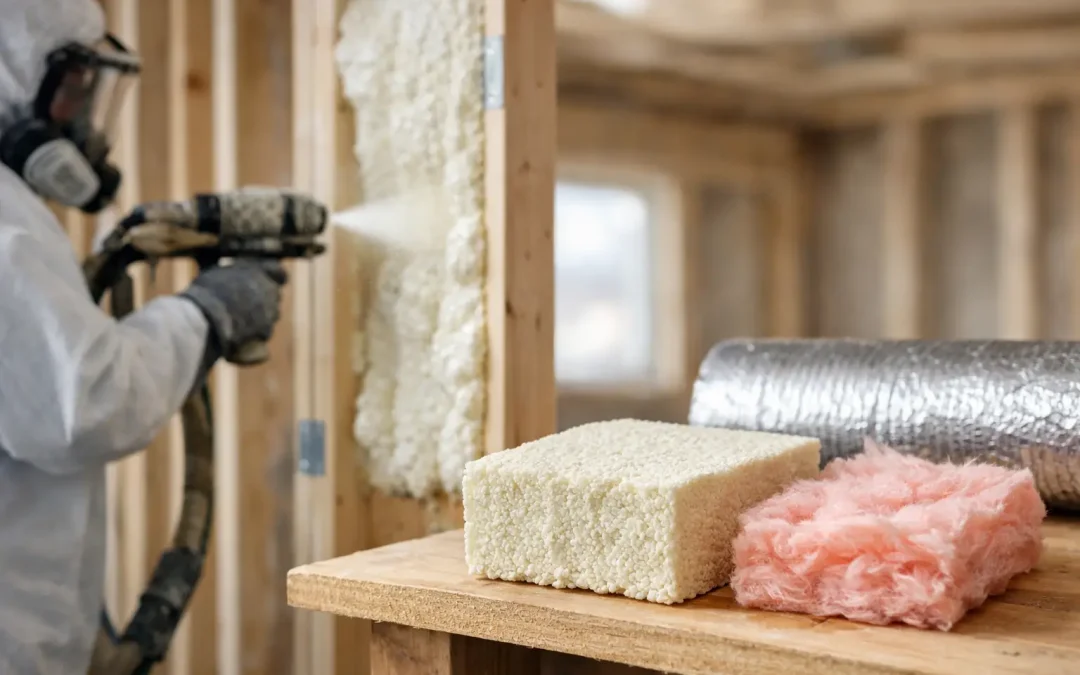
Closed-cell spray foam is a two-component insulation applied as a liquid that expands and hardens in place. Its tiny cells are largely closed and filled with insulating gas, creating a dense, rigid foam. Unlike fiberglass batts or blown insulation, it adheres to the surface being insulated and fills many of the cracks, seams, and irregular areas that allow conditioned air to escape.
That combination is the primary advantage: closed-cell foam insulates and air seals in one installation. In a home, that can mean fewer drafts, more even room temperatures, less strain on HVAC equipment, and better control over the dust and outdoor air entering through gaps in the building shell.
Closed-cell foam also delivers a high R-value for its thickness, commonly around R-6 to R-7 per inch depending on the product. That matters where space is limited. A roof deck with shallow rafters, a metal building wall, or a rim joist may not have room for the thickness of fiberglass or open-cell foam needed to reach the same thermal performance.
Where Closed-Cell Insulation Makes the Most Sense
The best insulation choice depends on the assembly, the local climate, available depth, and the building’s moisture risks. Closed-cell foam is particularly valuable in areas where air sealing, moisture resistance, and high R-value must work together.
Roof Decks and Cathedral Ceilings
Spraying closed-cell foam directly to the underside of a roof deck can create a conditioned attic or enclosed roof assembly when designed correctly. This approach brings ductwork and HVAC equipment inside the conditioned space, helping reduce losses from Arizona’s intense attic heat.
It is not automatically the right answer for every attic. Existing ventilation details, roof condition, combustion appliances, code requirements, and the desired R-value all need review before work begins. A qualified insulation contractor should assess the entire assembly rather than simply add foam wherever there is open space.
Crawl Spaces, Rim Joists, and Foundation Areas
Crawl spaces and rim joists are common sources of cold floors, musty odors, and unwanted outdoor air. Closed-cell foam is well suited to these locations because it seals complicated framing intersections while resisting moisture absorption better than many conventional insulation products.
In a crawl space, insulation alone does not solve every moisture issue. Standing water, plumbing leaks, poor drainage, and exposed soil may need to be addressed as part of a broader moisture-control plan. Foam is highly effective, but it should not be used to hide an active water problem.
Metal Buildings and Commercial Structures
Metal buildings heat up quickly in direct sun and can experience condensation when warm, humid air reaches cool metal surfaces. Closed-cell spray foam adheres to metal, reduces thermal transfer, and helps limit condensation potential when installed as part of a properly designed assembly.
For workshops, warehouses, agricultural buildings, and commercial spaces, that can improve occupant comfort and protect equipment, inventory, and interior finishes. The proper thickness depends on how the building will be used and whether it is heated, cooled, or occupied year-round.
Exterior Walls and Hard-to-Reach Cavities
Closed-cell foam can be a strong option for walls that need added structural rigidity, tight air control, or maximum R-value in a limited cavity. It is also useful around penetrations, behind kneewalls, and in other locations where batts are difficult to install without gaps.
That said, using closed-cell foam in every wall cavity is not always necessary. A hybrid approach may provide better value: closed-cell foam in targeted areas with fiberglass, rockwool, or open-cell foam used elsewhere. Good insulation design focuses on performance, not on applying the most expensive material everywhere.
Moisture Control Is a Major Advantage
Air movement carries a surprising amount of moisture. When humid air reaches a cool surface inside a wall, roof, or crawl space, condensation can form. Over time, that moisture can contribute to mold growth, wood damage, corrosion, and poor indoor-air conditions.
Because closed-cell foam is dense and low-permeance, it can provide meaningful resistance to water vapor at sufficient thickness. Many products function as a Class II vapor retarder at about 2 inches, although exact performance varies by manufacturer and installation thickness. This is why product specifications and local code requirements matter.
Closed-cell foam does not replace flashing, roofing, drainage, or proper exterior water management. Bulk water must always be directed away from the building. The foam’s role is to strengthen the building envelope by reducing air leakage and limiting vapor movement through the insulated assembly.
R-Value Matters, but Air Sealing Changes the Result
Homeowners often compare insulation by R-value alone. R-value measures resistance to heat flow, so it is a useful starting point. But it does not fully describe how a home performs when air leaks around, through, or behind the insulation.
Fiberglass can deliver good thermal performance when it is installed carefully and paired with a dedicated air barrier. The challenge is that gaps around wiring, plumbing, top plates, recessed areas, and framing connections are common. Closed-cell foam expands into those irregularities, making it especially effective in problem areas where drafts have been difficult to eliminate.
The result is not simply a higher number on an insulation label. It is a tighter home that can maintain more consistent temperatures and reduce the amount of hot, cold, dusty, or humid outdoor air entering the living space.
Cost and Trade-Offs to Consider
Closed-cell spray foam costs more upfront than fiberglass batts and many blown insulation options. The material is more expensive, installation requires specialized equipment and training, and the job must be planned around correct substrate conditions, thickness, and ventilation procedures.
For many property owners, the investment is justified by the combination of insulation, air sealing, moisture resistance, and long-term comfort. In the right location, it may also help reduce HVAC runtime and support a smaller, more effective heating and cooling system. Actual energy savings vary with the home’s current condition, duct leakage, thermostat habits, and equipment efficiency.
Closed-cell foam is not the best choice for every goal. Open-cell foam is often more cost-effective in deep interior cavities and is generally better at sound absorption. Rockwool can be an excellent option where fire resistance and sound control are priorities. Fiberglass and blown insulation can deliver strong value in large, accessible attic areas when air sealing is handled first.
There are also practical requirements. Spray foam must be installed by trained professionals using the right mix ratio and application technique. Occupants and pets should stay out of the work area during installation and reoccupy only after the contractor’s specified ventilation and curing period. In some locations, foam may require a thermal or ignition barrier to meet code.
Choosing the Right Thickness
Thickness should be based on the target R-value and the purpose of the assembly, not a one-size-fits-all rule. One inch of closed-cell foam can substantially improve air sealing and thermal control at a rim joist. A roof deck or exterior wall may require more thickness to meet code or achieve the desired comfort and energy performance.
A professional assessment should consider the framing depth, roof or wall design, existing insulation, local climate zone, mechanical systems, moisture conditions, and whether the space will be conditioned. In Payson and throughout Rim Country, elevation and winter temperatures can make insulation details especially important, even in a state known for heat.
What a Quality Installation Should Include
A quality closed-cell foam project starts before the spray rig arrives. The contractor should identify air leaks, inspect for water intrusion or damaged materials, protect adjacent surfaces, and confirm that the application area is ready.
During installation, foam should be applied in controlled lifts to achieve the intended thickness and avoid overheating the material. Afterward, the installer should inspect coverage, trim excess foam where required, and make sure the finished assembly works with electrical, mechanical, and fire-protection requirements.
The difference between average and high-performing insulation is often in these details. Even premium material cannot deliver its full value if it is sprayed unevenly, installed over unresolved moisture problems, or disconnected from the rest of the home’s air-sealing strategy.
Closed-cell spray foam earns its reputation when it is used deliberately: in the places where a tighter, drier, more efficient building envelope will make a measurable difference for years to come.