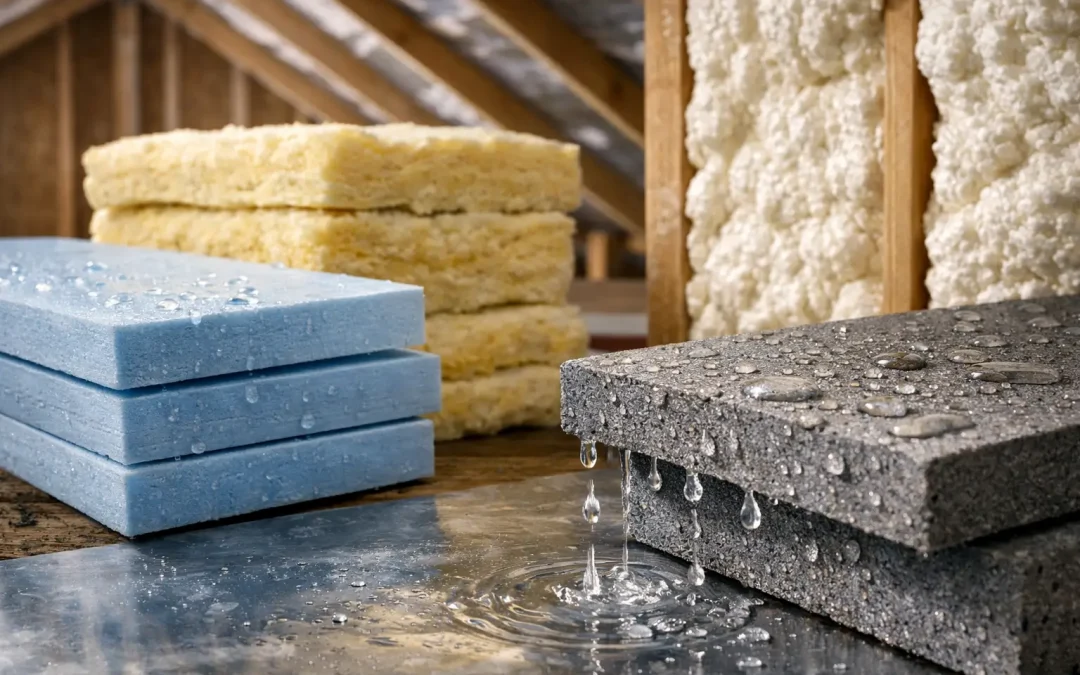
A damp insulation cavity rarely stays a small problem. Moisture can cut insulation performance, feed mold growth, stain finishes, corrode metal, and put framing at risk. So, what insulation resists moisture best? For most residential and commercial applications, closed-cell spray foam is the strongest all-around choice because it resists water absorption while also air sealing the assembly.
That answer comes with an important qualification: no insulation product can solve an active roof leak, plumbing leak, poor drainage, or missing flashing. Moisture-resistant insulation is part of a durable building envelope, not a substitute for fixing the source of water. The right material also depends on whether the moisture risk comes from rain, ground vapor, humid air, or condensation.
What Insulation Resists Moisture Best in Real Conditions?
Closed-cell spray foam offers the best moisture resistance among commonly installed insulation materials. Its tightly packed cells create a dense foam that rejects bulk water far better than fibrous insulation. When professionally installed at the proper thickness, it also significantly limits air movement, which matters because warm, humid air leaking into a cold cavity is a major cause of condensation.
This combination is what separates closed-cell foam from many conventional options. Insulation can have a respectable R-value and still allow air to move through gaps, seams, and penetrations. Once that moving air carries moisture into a wall, roof, crawl space, or metal building, the assembly can develop hidden problems long before there is a visible stain.
Closed-cell foam is especially well suited to areas where moisture resistance and insulation performance need to work together: crawl spaces, rim joists, basement walls, cathedral ceilings, exterior walls, pole barns, and metal buildings. It adheres directly to many surfaces and helps create a more continuous thermal boundary with fewer gaps.
It is not automatically the right answer for every part of every building. Proper thickness, roof and wall design, local code requirements, and the ability of an assembly to dry all deserve professional consideration. But when the question is strictly which insulation material best resists moisture while delivering high thermal performance, closed-cell spray foam leads the field.
Why Air Sealing Is Central to Moisture Control
Water does not only enter a building through a leak. It also travels with air. In winter, heated indoor air can escape through openings around wiring, recessed fixtures, top plates, ducts, and framing transitions. When that air reaches a cold surface, the moisture it carries can condense.
In Arizona, homeowners often think moisture is only a concern during monsoon season. Yet high-elevation areas around Payson and the Rim Country can experience cold nights and large temperature swings that make condensation control a year-round building-envelope concern. Bathrooms, kitchens, laundry rooms, crawl spaces, and poorly vented attics can all introduce moisture into vulnerable areas.
Closed-cell spray foam addresses this problem in one application. It insulates and air seals, reducing the pathways that allow moisture-laden air to reach cooler surfaces. That can mean fewer drafts, more even indoor temperatures, lower heating and cooling demand, and a more durable structure.
How Other Insulation Materials Handle Moisture
Several insulation products can be appropriate in the right setting. The difference is that most do not provide the same combination of water resistance and air sealing as closed-cell spray foam.
Open-Cell Spray Foam
Open-cell spray foam provides excellent air sealing and expands deeply into irregular cavities. It is often a strong choice for interior walls, attic rooflines, and areas where sound control is valuable. However, its open cell structure is more vapor permeable and can absorb water if it is exposed to a leak.
That does not make open-cell foam a poor product. In assemblies designed to dry and in locations without direct moisture exposure, it can perform very well. For crawl spaces, below-grade areas, or building components where bulk water and vapor are bigger concerns, closed-cell foam is usually the more protective option.
Mineral Wool
Mineral wool, also called rockwool, is naturally water repellent and does not readily support mold growth. It holds its shape well and remains a dependable insulation option for exterior walls, fire-rated assemblies, and certain commercial applications.
Its limitation is air movement. Mineral wool batts do not air seal a cavity on their own. Water can drain through the material, which may be beneficial in a properly designed wall, but the surrounding assembly still needs dependable weather protection, air control, and vapor management. Mineral wool is moisture tolerant, not a waterproof or airtight solution.
Fiberglass Batts and Blow-In Fiberglass
Fiberglass does not absorb water in the same way organic materials do, but it can trap moisture within the cavity and lose effective thermal performance when wet or compressed. It also allows air to pass through unless paired with a carefully installed air barrier.
Fiberglass remains a budget-conscious insulation option for dry, accessible cavities when installation quality is high. In moisture-prone areas, though, gaps around batts and air leakage through the assembly can create the conditions that lead to condensation and mold on nearby wood or drywall.
Cellulose
Cellulose is treated for fire and pest resistance and can deliver good thermal and sound performance. But because it is made primarily from recycled paper fiber, it is less forgiving when exposed to repeated moisture. A roof leak or wet crawl space can cause cellulose to settle, clump, and lose performance.
For dry attics with proper air sealing and ventilation, cellulose can be effective. It is not the preferred material where ground moisture, plumbing leaks, or frequent condensation are realistic risks.
The Best Choice by Location
The location of the insulation matters as much as the material itself. Crawl spaces and rim joists are among the strongest candidates for closed-cell spray foam because these areas often face humid outdoor air, soil moisture, plumbing penetrations, and cold surfaces. Spraying the right surfaces can help control air leakage and limit moisture migration into the structure.
For rooflines and attics, the decision depends on whether the attic will remain vented or become part of the conditioned space. Closed-cell foam is valuable where roof deck condensation, limited cavity depth, or moisture resistance is a priority. Open-cell foam may be appropriate on a roofline when the assembly is designed for vapor control and drying. A qualified installer should evaluate the roof construction rather than treating all attics alike.
In exterior walls, closed-cell foam can add high R-value in a relatively thin space while reducing air leakage. That is useful in remodels, metal buildings, and walls with limited cavity depth. Mineral wool and fiberglass can also work in walls, but they need a well-detailed air and weather barrier system around them.
Metal buildings deserve special attention. Metal readily transmits temperature changes, so condensation can form when warm interior air meets a cold metal panel. Closed-cell spray foam applied directly to the interior side of the metal can reduce condensation risk, improve comfort, and help protect the building from corrosion caused by repeated moisture exposure.
Moisture Resistance Does Not Mean Ignore Drainage
Even the best insulation should not be asked to manage standing water or a failing exterior. Before insulating a damp area, correct roof leaks, foundation drainage issues, plumbing leaks, broken gutters, and grading that directs water toward the building.
The same principle applies to vapor. A crawl space may need ground-cover vapor control, sealed penetrations, and mechanical humidity management in addition to insulation. A roof assembly may need correct ventilation or a specifically engineered unvented design. Good moisture control comes from layers working together: drainage, flashing, air sealing, insulation, and ventilation where the building design calls for it.
What to Ask Before Choosing Moisture-Resistant Insulation
A better question than “Which product is cheapest?” is “What is bringing moisture toward this part of the building?” A contractor should identify whether the concern is bulk water, ground vapor, humid indoor air, outside air leakage, or condensation on a cold surface.
Also ask whether the insulation will be installed against masonry, metal, roof sheathing, or wood framing; whether the area can dry if it ever gets wet; and whether other layers in the assembly are already acting as air or vapor control. These details determine the right thickness and product, and they prevent a well-intended insulation upgrade from trapping moisture where it does not belong.
For property owners who want the highest level of moisture resistance with meaningful air sealing and energy benefits, closed-cell spray foam is usually the clear choice. A careful evaluation of the building and the moisture source is what turns that material advantage into a drier, healthier, more comfortable space for years to come.