
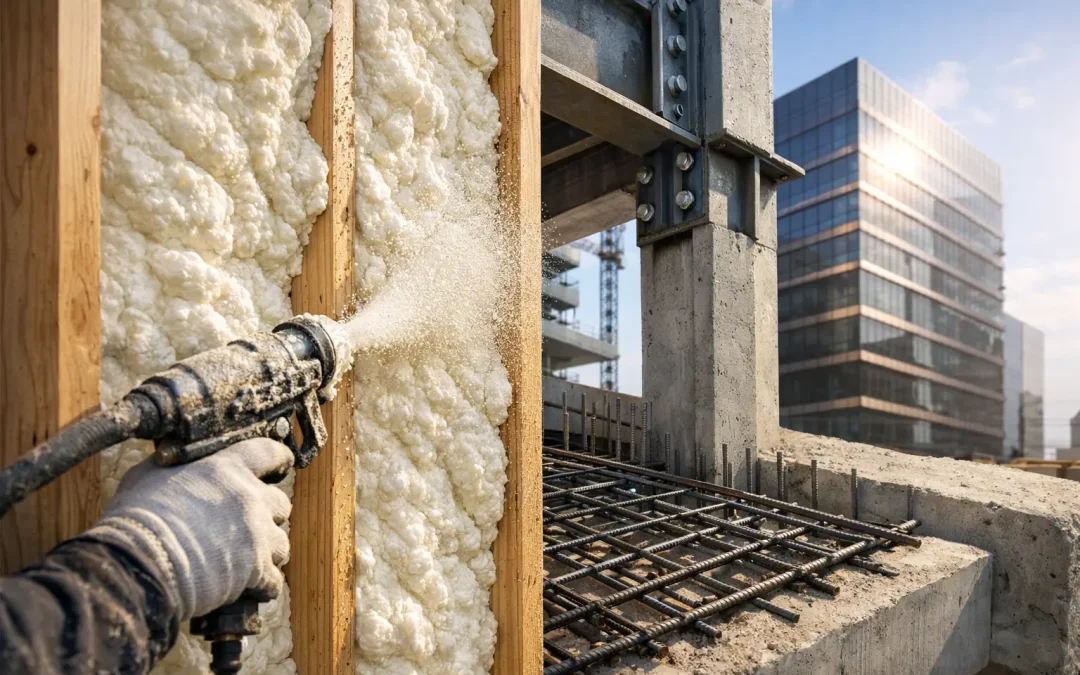
A wall can look finished and still feel weak, drafty, or vulnerable to moisture behind the drywall. That is where understanding how closed cell adds strength matters. Closed-cell spray foam does more than slow heat transfer. When it is properly applied to the right surface and thickness, it creates a dense, adhered layer that can support a tighter, stiffer, more durable building envelope.
For Arizona homeowners and builders, that performance has real value. Buildings in Payson and the Rim Country deal with hot sun, cold nights, seasonal moisture, and strong temperature swings. Insulation needs to do more than fill empty cavities. It needs to help control air movement, manage moisture, and protect the building materials that carry the load.
How Closed Cell Adds Strength in Building Assemblies
Closed-cell spray foam is made of tiny cells filled with blowing agent and sealed off from one another. Once the foam cures, it becomes a firm, rigid material rather than a soft, flexible insulation. That density is the foundation of its strength-related benefits.
Most closed-cell foam is installed at roughly 2 pounds per cubic foot, although exact density varies by product. It is significantly denser than open-cell spray foam and much more rigid than fiberglass batts or blown insulation. When sprayed directly against wood, metal, masonry, or roof sheathing, it adheres to that surface and fills small gaps that other insulation materials often leave behind.
The result is not a replacement for framing, sheathing, engineered bracing, or proper fasteners. A home still needs its structural components designed and installed correctly. But closed-cell foam can contribute to the overall stiffness and durability of certain wall, roof, and floor assemblies when it is part of a tested, properly designed system.
Dense Foam Creates a Firm, Continuous Layer
The rigid nature of closed-cell foam helps it resist compression better than lighter insulation materials. In a wall cavity, it does not sag or settle over time the way poorly installed batt insulation can. In a floor assembly or beneath a roof deck, it stays in contact with the substrate, maintaining its insulating and air-sealing performance.
That continuous contact matters. Gaps around plumbing, wiring, framing intersections, and irregular surfaces allow air movement and can leave building materials exposed to temperature and moisture changes. Closed-cell foam expands into those areas and cures in place, creating one continuous layer instead of a collection of separate pieces.
Adhesion Can Improve Assembly Rigidity
Because closed-cell spray foam bonds to the surfaces it touches, it can add stiffness to an assembly. This benefit is often discussed in relation to wall and roof sheathing. Foam applied to the interior side of sheathing can help tie the sheathing and framing together more continuously than insulation that simply rests inside the cavity.
The degree of added structural benefit depends on the specific foam product, its thickness, the framing layout, the substrate, and the entire assembly design. Builders should rely on manufacturer documentation, code requirements, and an engineer when structural performance is part of the project goal. It is not appropriate to assume that any spray foam installation automatically provides a specific racking or wind-resistance rating.
Where Closed-Cell Foam Can Make the Biggest Difference
Closed-cell foam is especially useful in places where a building needs insulation, air sealing, and moisture control at the same time. Its ability to perform several jobs in one application is why it is often the premium choice for high-performance homes and commercial buildings.
Exterior Walls and Framed Cavities
In exterior walls, closed-cell foam adheres to the backside of the sheathing and fills around framing members, pipes, and electrical penetrations. It helps reduce air leakage that can make rooms feel cold in winter and overheated in summer.
By limiting humid air from reaching cooler surfaces inside the wall, it can also reduce the risk of condensation. Less moisture moving through an assembly means less opportunity for wood decay, corrosion, or mold growth on susceptible materials. The foam itself does not create a mold problem, but keeping bulk water and humid air out of wall cavities supports a healthier building enclosure.
Roof Decks and Cathedral Ceilings
A roof deck is one of the strongest applications for closed-cell foam. Spraying the underside of roof sheathing can create an insulated, conditioned attic space while helping seal the many air-leakage paths found at roof framing, penetrations, and transitions.
The foam’s adhesion and rigidity can be helpful on roof assemblies, especially where wind-driven rain, humidity, or extreme temperature changes are concerns. However, roof design still matters. Ventilation strategy, roofing materials, moisture conditions, local code requirements, and the foam manufacturer’s approved installation details must all be considered before creating an unvented roof assembly.
Crawl Spaces, Rim Joists, and Floors
Crawl spaces and rim joists are frequent sources of drafts, cold floors, and moisture trouble. Closed-cell foam works well in these locations because it can fit around irregular framing and resist moisture better than air-permeable insulation.
Under floors, it can help support a more stable indoor temperature while protecting the insulation layer from humid crawl-space air. In metal buildings, it can also adhere directly to metal panels, reducing condensation risk and helping create a more comfortable, usable interior.
Strength Does Not Mean Closed-Cell Foam Replaces Structure
This distinction is critical. Closed-cell foam can reinforce the performance of an assembly, but it does not replace structural engineering. It should never be used as a reason to remove required bracing, reduce sheathing, skip connectors, or ignore local building code.
A wall’s ability to resist wind, seismic movement, or lateral loads comes from the full system: foundation connection, framing, structural panels, fasteners, headers, hold-downs, and proper design. Spray foam may add useful stiffness, but its role must be supported by product-specific testing if a builder intends to count it toward a structural requirement.
There are also situations where another insulation choice makes more sense. Open-cell spray foam can be an excellent option for interior cavities where sound control and air sealing are priorities, but high density and vapor resistance are not needed. Fiberglass or rockwool may be preferred where budget, fire-resistance goals, or a particular wall design calls for them. The best insulation is not simply the densest product. It is the material that fits the building, climate, and performance target.
Moisture Resistance Protects Long-Term Strength
One of closed-cell foam’s most valuable benefits is that it can slow moisture vapor movement while also stopping air leakage. At sufficient thickness, many closed-cell foam products function as a vapor retarder. This is a major advantage in assemblies where humid air or incidental moisture could otherwise reach wood, steel, or cold surfaces.
Moisture is a long-term threat to building strength. Repeated wetting can lead to wood rot, corrosion of metal components, degraded sheathing, and damaged finishes. By helping control air and moisture movement, closed-cell foam supports the durability of the materials that actually carry the building’s load.
That said, spray foam is not a fix for leaks. A roof leak, plumbing leak, or drainage issue must be repaired at the source. Proper flashing, roofing, exterior drainage, and water management remain essential. Foam performs best when it is part of a complete building-envelope strategy, not a substitute for good construction practices.
Thickness, Installation Quality, and Code Matter
Closed-cell foam only delivers its intended benefits when it is installed correctly. Thickness must be consistent, the substrate must be clean and dry, and the foam must be applied within the manufacturer’s approved temperature and lift limits. Poorly mixed or improperly applied foam can affect adhesion, density, and long-term performance.
The required thickness also depends on the job. A thin application may help air seal a difficult area, while a roofline or exterior wall may need several inches to reach the desired R-value and moisture-control performance. Local code requirements, climate zone, and assembly design should guide the final specification.
Professional installation also includes planning for required thermal or ignition barriers where applicable. Spray foam is a high-performance material, but it must be installed as part of a code-compliant system.
A Stronger Envelope Starts With the Right Plan
Closed-cell spray foam earns its reputation because it does more than insulate. Its density, adhesion, air sealing, and moisture resistance can help create walls, roofs, floors, and metal-building assemblies that perform better for the long haul. The biggest return comes from using it where those combined benefits solve a real building challenge.
Before choosing insulation, look at the whole enclosure: where air enters, where moisture can collect, what temperatures the assembly faces, and what the building needs to withstand over time. A thoughtful foam design can make the home feel more comfortable now while helping protect the structure for years to come.