A cold bedroom on a winter morning, a second floor that will not cool down in July, and HVAC equipment that seems to run constantly often point to the same place: the attic. Homeowners frequently ask, “when should attic insulation be replaced?” The answer is not based on age alone. Insulation should be replaced when it is damaged, contaminated, compressed, moisture-affected, or no longer delivering the comfort and energy performance your home needs.
In Arizona, attic conditions can be especially hard on conventional insulation. High summer heat, wind-driven dust, roof leaks, rodents, and decades of foot traffic can reduce its effectiveness. A proper evaluation looks beyond whether insulation is present and focuses on whether it is still working as part of a complete building envelope.
When Should Attic Insulation Be Replaced?
Attic insulation does not have a fixed expiration date. Fiberglass, cellulose, and rockwool can remain useful for many years when they stay dry, clean, evenly installed, and protected from air movement. But material that looks acceptable from the attic hatch may still be underperforming.
Replacement becomes the right call when the insulation cannot reasonably be restored to reliable performance. Sometimes that means removing all existing material. In other cases, a contractor can address an air-sealing problem, correct ventilation or roof issues, and add insulation over material that remains clean and dry. The right scope depends on the cause of the problem, not just the condition visible from above.
Five signs your attic insulation needs attention
The following conditions are strong reasons to schedule a professional inspection:
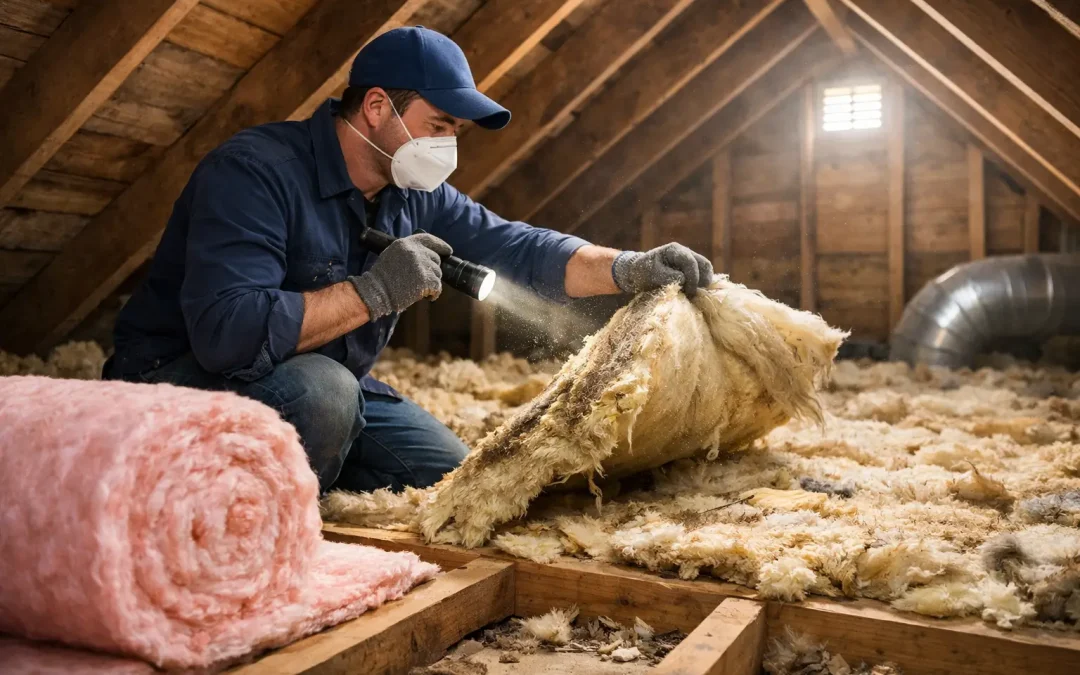
- Water damage or mold growth. Wet insulation loses thermal performance, can mat down, and may hold moisture against framing. The leak or humidity source must be corrected before new insulation is installed.
- Rodent, bird, or pest contamination. Droppings, nesting material, urine odor, and damaged ductwork create a health and sanitation concern. Contaminated insulation usually needs removal rather than a simple top-off.
- Compressed, thin, or uneven coverage. Insulation that has settled, been trampled, or shifted away from areas of the ceiling leaves weak spots where heat moves easily.
- Persistent dust, smoke, or odor contamination. Heavy dust can indicate significant air leakage from the home into the attic. Smoke damage and stubborn odors can also make replacement worthwhile.
- High utility bills and uneven comfort. Rising energy costs are not always an insulation problem, but rooms that remain too hot, cold, or drafty deserve a building-envelope assessment.
Each sign has a different remedy. For example, adding more loose-fill insulation over moisture-damaged material traps the underlying problem rather than fixing it. Likewise, new insulation will not stop drafts if open gaps around plumbing penetrations, wiring, top plates, recessed fixtures, or duct connections are still allowing air to move.
Age Matters Less Than Performance
Many homes have attic insulation that is 20, 30, or even 40 years old. That alone does not make it unusable. The better question is whether it has retained adequate depth and R-value, whether it is dry and uncontaminated, and whether the attic floor is properly air sealed.
Older fiberglass batts are often installed with gaps, folds, or voids around framing and electrical penetrations. Loose-fill fiberglass and cellulose may settle over time, reducing the effective R-value. In homes where older insulation was installed before current efficiency expectations, there may simply not be enough material in the attic to control heat flow effectively.
A contractor should measure the existing insulation depth, inspect for missing coverage, and identify the air leaks that reduce its real-world performance. This matters because insulation slows heat transfer, while air sealing stops conditioned air from escaping through cracks and openings. A home needs both.
Moisture and Pests Change the Decision
Water-stained sheathing, damp insulation, mold, or a musty odor should never be treated as a cosmetic issue. Moisture can come from a roof leak, failed flashing, bathroom exhaust vented into the attic, plumbing leaks, or warm indoor air escaping into a cold attic during winter. Until the source is identified and repaired, replacement insulation is at risk of the same damage.
Pest activity calls for the same level of care. Rodents can tunnel through loose-fill material, tear fiberglass batts apart, chew wiring, and leave contamination throughout the attic. Removal allows the space to be cleaned, entry points to be addressed, and damaged ducts or wiring to be evaluated before the new insulation goes in.
For homeowners concerned about indoor air quality, this is also an opportunity to improve the separation between the living space and attic. Air sealing the ceiling plane limits pathways for dusty attic air, odors, and insulation fibers to enter the home.
Why Adding More Insulation Is Not Always Enough
Adding insulation is often cost-effective when the existing material is clean, dry, and reasonably even but below the desired R-value. It can improve comfort without the expense of a full removal. However, more material cannot correct every attic problem.
If the attic has widespread contamination, active moisture issues, severe settling, or major air leakage, a simple top-off may produce disappointing results. You may still have drafts, heat gain, and moisture movement even with a deeper layer of insulation. The cheapest material-only approach can become expensive when it has to be redone later.
The decision also changes when the goal is higher whole-home performance. Conventional blown-in insulation and batts can provide dependable thermal resistance, but they do not air seal on their own. Spray foam insulation is different because it insulates and air seals in one application. Properly selected and installed, it can be especially valuable in difficult attic assemblies, around irregular framing, and in areas where air leakage is a major source of comfort loss.
Open-cell and closed-cell spray foam serve different purposes. Open-cell foam expands to fill cavities and provides effective air sealing with sound-control benefits. Closed-cell foam offers a higher R-value per inch and adds strong moisture resistance. The best choice depends on the attic design, available space, moisture conditions, roof assembly, and project goals.
Consider the Attic Design Before Choosing a Replacement
Not every attic should be insulated the same way. In a traditional vented attic, insulation is typically installed at the ceiling plane, separating the conditioned home from the unconditioned attic. The priority is thorough air sealing and sufficient, even insulation coverage across that ceiling.
In some homes, insulating the roofline can bring the attic into the conditioned envelope. This approach can benefit homes with HVAC equipment, ductwork, or complex mechanical systems located in the attic, because those components are no longer exposed to extreme attic temperatures. Spray foam is commonly used for this strategy because it conforms to the underside of the roof deck and controls air movement.
There are trade-offs. A roofline insulation approach requires careful design for moisture management, combustion safety where applicable, and code compliance. It is not automatically the best answer for every house. A qualified insulation contractor should assess the roof assembly, ventilation plan, duct location, and the home’s specific comfort concerns before recommending a system.
What a Thorough Attic Insulation Evaluation Should Cover
An effective attic assessment is more than a quick look at insulation depth. It should examine the condition of the existing material, signs of roof or plumbing leaks, pest activity, attic ventilation, and air leaks at the ceiling plane. Ducts should also be checked for disconnected runs, damaged insulation, and leakage that can waste conditioned air.
The evaluation should connect attic findings to the problems you feel inside the home. A hot west-facing room, cold floors, dusty air, ice-cold supply air in winter, or high cooling bills may have overlapping causes. Insulation is a major part of the solution, but windows, HVAC sizing, duct condition, and ventilation can influence results as well.
For Payson and Rim Country homes, the seasonal swing between cold winter nights and intense summer sun makes this level of detail worthwhile. The goal is not merely to put more material overhead. It is to create a tighter, drier, more efficient home that stays comfortable through changing conditions.
Before replacing attic insulation, solve the reason it failed and choose a system that supports the way your home is built. A careful inspection now can prevent another round of drafts, wasted energy, and avoidable repairs later.